


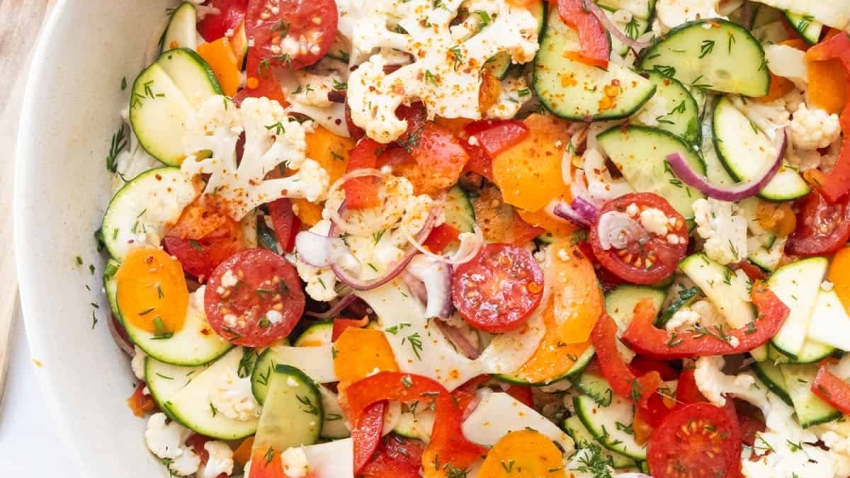
Marinated Vegetable Salad – The clever meal
This post may contain affiliate links. Please read my disclosure policy for more details.
This refreshing marinated vegetable salad is a combination of crunchy, juicy veggies bursting with color, flavor, and nutrition! And no cooking is required!
Published in May 2023/Updated in June 2026
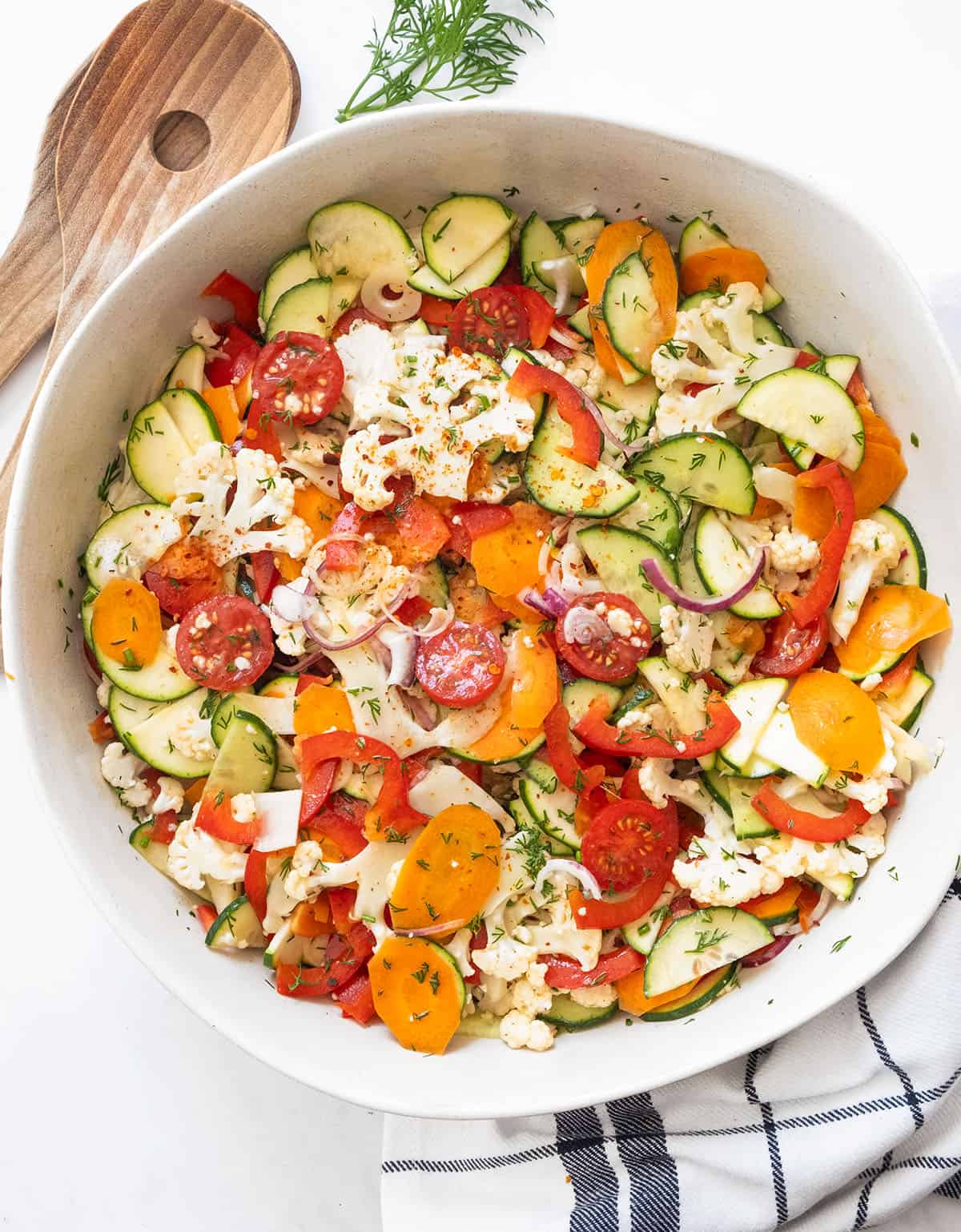
Fresh zucchini, cauliflower, carrots, tomatoes, cucumber, bell peppers… this is basically a high pile of vibrant, feel-good-in-your-body vegetables, right? And it’s so fresh, flavorful, and just perfect as it starts to warm up.
Join my newsletter for free weekly recipes!
But the list of great things about this marinated vegetable salad is pretty long!
Not only does it make a great, healthy vegetarian dish, but it is quick and easy to make, budget-friendly, requires no cooking, keeps well in the fridge, and you can add almost anything you love to it!
You could swap in any crispy vegetables you happen to have in the fridge or growing in your garden. And if you want to add diced avocado, savory feta, or olives for more flavor… simply toss them in.
All you have to do is slice the veggies, toss them with a simple yet flavorful marinade, and let the mixture of summer produce soak for at least 1 hour.
The marinade will add so much flavor and moisture. That’s it.
Simple, delicious, and ultra-light, this marinated veggie salad pairs with anything. A clever summer recipe that you’ll be making again and again!
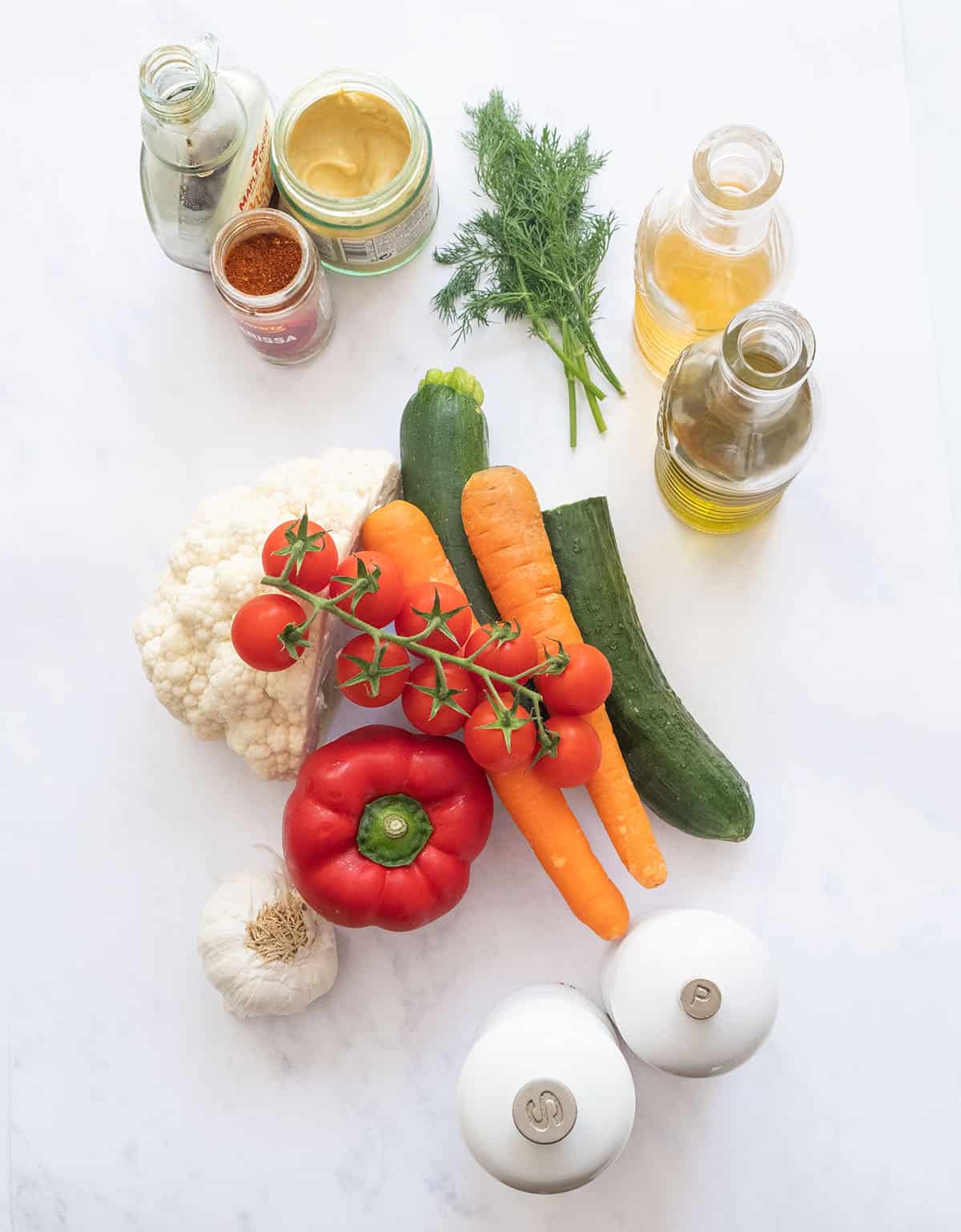
List of the ingredients
- Crispy vegetables in season (see notes!)
- Extra virgin olive oil
- Lemon juice
- Honey or maple syrup
- Dijon mustard
- Garlic & red onion
- Herbs
- Salt, pepper & chili flakes.
Let’s make a marinated vegetable salad
(Note: this is a quick description; the full recipe is at the bottom of the page)
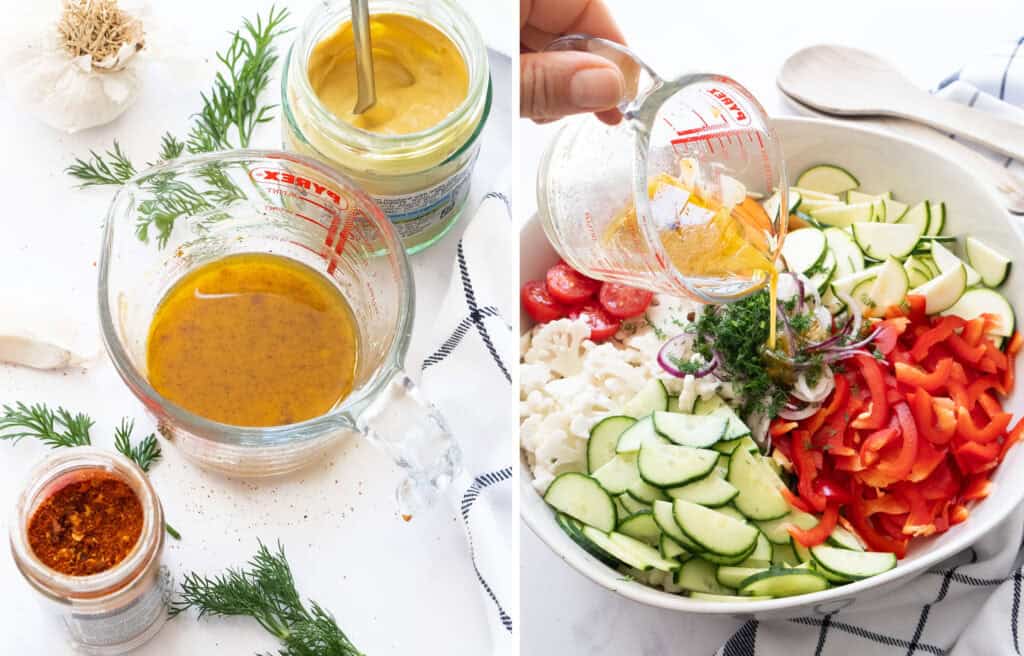
- Wash, slice, and add your veggies to a large bowl. I recommend using a mandoline for this task. It’s a handy, inexpensive kitchen tool that slices veggies in seconds. Alternatively, a sharp knife or a food processor with a slicer attachment works. Whichever is easier for you.
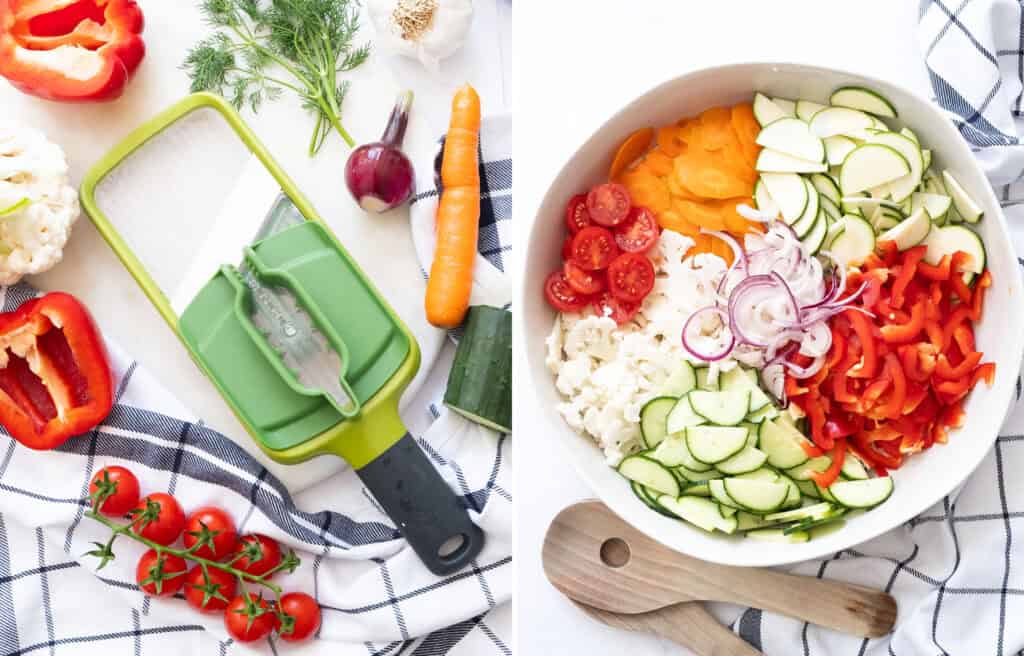
- Make the dressing, then pour it over and toss until well combined. Taste and adjust the seasoning to your liking.
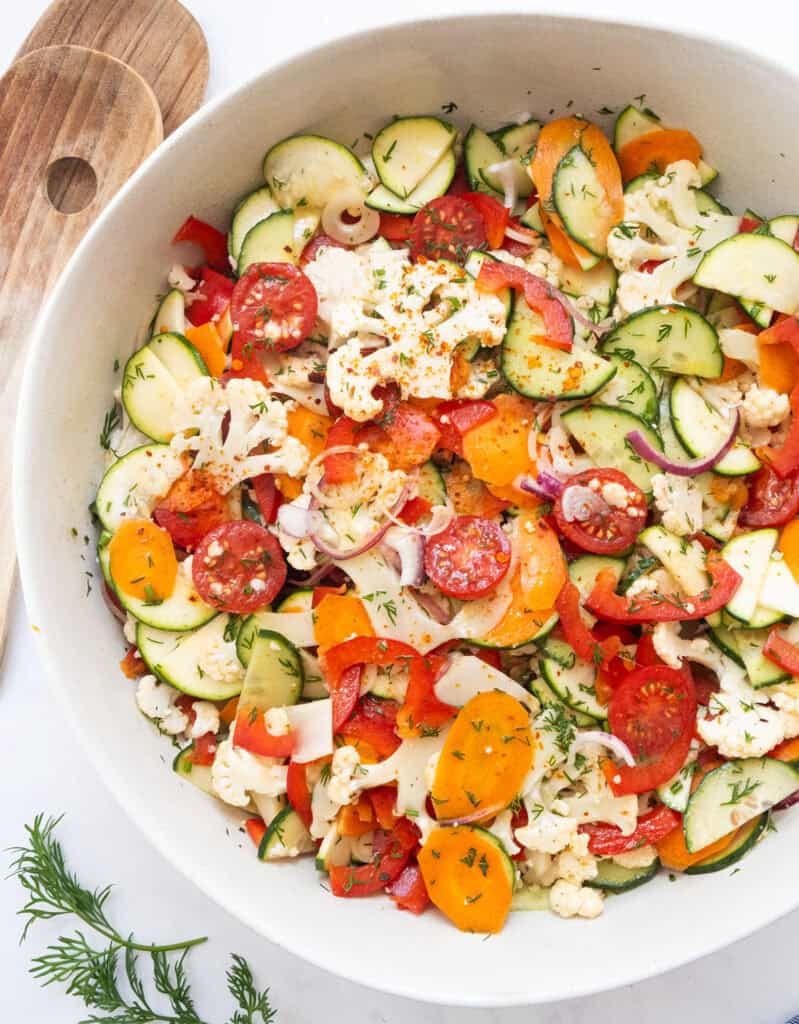
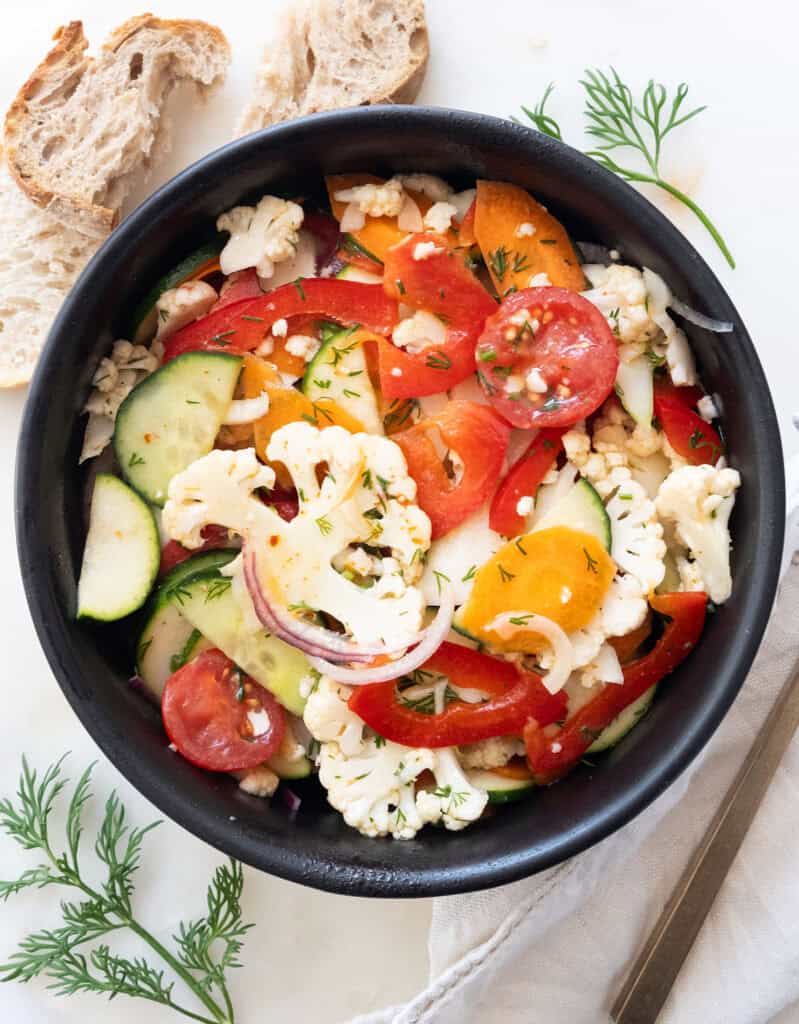
- Let it rest for at least 1 hour and serve. Some crispy Italian bread, or focaccia on the side, would be just great!
Recipe notes
Marinated Vegetable Salad Ingredients
Veggies: I used a combination of cauliflower, cucumber, zucchini, bell pepper, onion, and tomatoes. You are welcome to use cabbage, fennel, baby corn, celeriac, and any other favorite vegetable that is easy to slice and has a crispy texture. I’m not a big fan of raw broccoli, but you can use it if you wish. Just steer clear of soft, not-so-fresh veggies; choose fresh, crispy veggies instead.
Herbs: I used fresh dill and dried basil, and I also love fresh basil or chives instead of dill. Feel free to toss in fresh herbs you love most, especially if fresh from your garden!
Marinade: Good-quality fruity extra-virgin olive oil will make a big difference. Then, fresh garlic, apple cider vinegar, maple syrup for sweetness, Dijon mustard (not the English one!) for extra flavor and texture, and some harissa seasoning for a touch of heat. For any substitutions, you’re welcome to use honey, your favorite vinegar, and chili/red pepper flakes (optional). Plus salt and pepper to taste, of course!
hELPFUL TIPS
1. I recommend slicing the veggies rather than cutting big chunks. Slices soak the marinade better than big chunks of veggies and are more pleasant to eat.
2. If you plan to refrigerate your marinated vegetables for days, just slice the veggies a bit thicker.
3. Don’t use leafy greens such as lettuce or spinach, or soft vegetables like mushrooms. They don’t keep well and get mushy quickly.
4. You can also grill your zucchini and bell peppers for the recipe, although using them raw is a great plus of this simple, no-cook dish.
Storage tips
Marinated vegetable salad keeps well in an airtight glass container in the fridge for up to 4 days. Tomatoes in it keep well, but they’re best within 2-3 days; I recommend adding them if you plan to enjoy this salad within that time.
Marinated salad variations
As mentioned in the ingredients, you can swap your favorite fresh, crispy vegetables in this recipe, but I thought to add a few ideas for customizations we enjoy most!
- Protein: If you want to keep it vegan, my go-to add-ins are chickpeas, lentils, or white beans (previously drained!). Otherwise, roasted or grilled chicken is great too.
- Cheese: Feta cheese or fresh baby mozzarella balls. Delicious!
- Grains: Toss in 1 or 2 cups of cooked quinoa, brown rice, or couscous. Add the grains before serving, as couscous and quinoa will soak up the marinated and get too soggy.
- More add-ins? Olives, canned tuna, capers, and seeds.
More salad recipes?
Here are more easy-to-make salads that are truly delicious.
Below are a few of my favs:
If you make this marinated vegetable salad or have a question, let me know by leaving a comment. I would love to hear from you! x
And for more recipe updates, follow me on Instagram, Pinterest, and Facebook.
Marinated Vegetable Salad
This marinated vegetable salad is a combination of crunchy and refreshing veggies. The lemon garlic marinade adds flavour and makes each bite juicy and delicious.
Servings: 6
Calories: 137kcal
- 1 medium-sized zucchini, sliced (2 cups)
- 2 medium-sized carrots, sliced (2 cups)
- ½ Long cucumber, sliced (2 cups)
- 1 small red bell pepper, sliced (2 cups)
- ½ cauliflower head, sliced (2 cups)
- 1 red onion, sliced
- 10 cherry tomatoes, cut into halves (optional)
- 2-3 tablespoon chopped dill or basil
Marinade
- ¼ cup extra virgin olive oil
- ¼ cup apple cider vinegar (or wine vinegar)
- 1 ½ teaspoon honey or maple syrup
- 2 teaspoon Dijon mustard
- 1 teaspoon dried basil (skip if using fresh basil)
- 1 garlic clove, grated
- ½ teaspoon fine salt (taste to season before serving)
- ¼ teaspoon black pepper
- ½ to ¾ teaspoon harissa or chili flakes (optional)
-
Wash and slice the peeled carrots, zucchini, bell pepper, cucumber, and cauliflower. I recommend using a mandoline and keeping a uniform thickness of about ⅓ inch (or just a bit less than 1 cm). Cut the cherry tomatoes into quarters or halves. Transfer all the veggies to a large salad bowl.
-
Put the marinade ingredients in a jam jar. Screw the lid on tight and shake until the marinade looks smooth and emulsified.
-
Pour the marinade over the salad, toss well until combined, taste, and make sure you are happy with the seasoning.
-
Let it rest for at least 1 hour before serving, and store the leftovers in an airtight container in the fridge for up to 2 days. Enjoy!
Calories: 137kcal | Carbohydrates: 12g | Protein: 3g | Fat: 10g | Saturated Fat: 1g | Polyunsaturated Fat: 1g | Monounsaturated Fat: 7g | Sodium: 250mg | Potassium: 491mg | Fiber: 3g | Sugar: 7g | Vitamin A: 4249IU | Vitamin C: 66mg | Calcium: 40mg | Iron: 1mg
Join my newsletter for free weekly recipes!
PakarPBN
A Private Blog Network (PBN) is a collection of websites that are controlled by a single individual or organization and used primarily to build backlinks to a “money site” in order to influence its ranking in search engines such as Google. The core idea behind a PBN is based on the importance of backlinks in Google’s ranking algorithm. Since Google views backlinks as signals of authority and trust, some website owners attempt to artificially create these signals through a controlled network of sites.
In a typical PBN setup, the owner acquires expired or aged domains that already have existing authority, backlinks, and history. These domains are rebuilt with new content and hosted separately, often using different IP addresses, hosting providers, themes, and ownership details to make them appear unrelated. Within the content published on these sites, links are strategically placed that point to the main website the owner wants to rank higher. By doing this, the owner attempts to pass link equity (also known as “link juice”) from the PBN sites to the target website.
The purpose of a PBN is to give the impression that the target website is naturally earning links from multiple independent sources. If done effectively, this can temporarily improve keyword rankings, increase organic visibility, and drive more traffic from search results.






Leave a Reply