


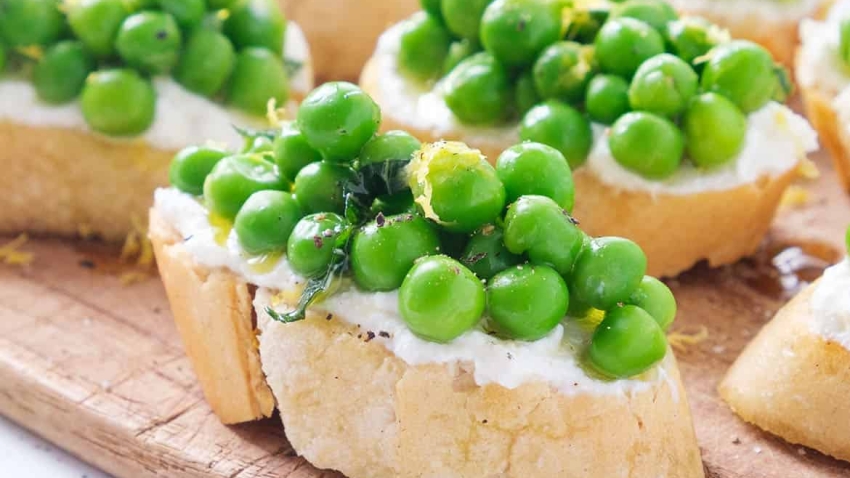
Pea & Ricotta Crostini – The clever meal
This post may contain affiliate links. Please read my disclosure policy for more details.
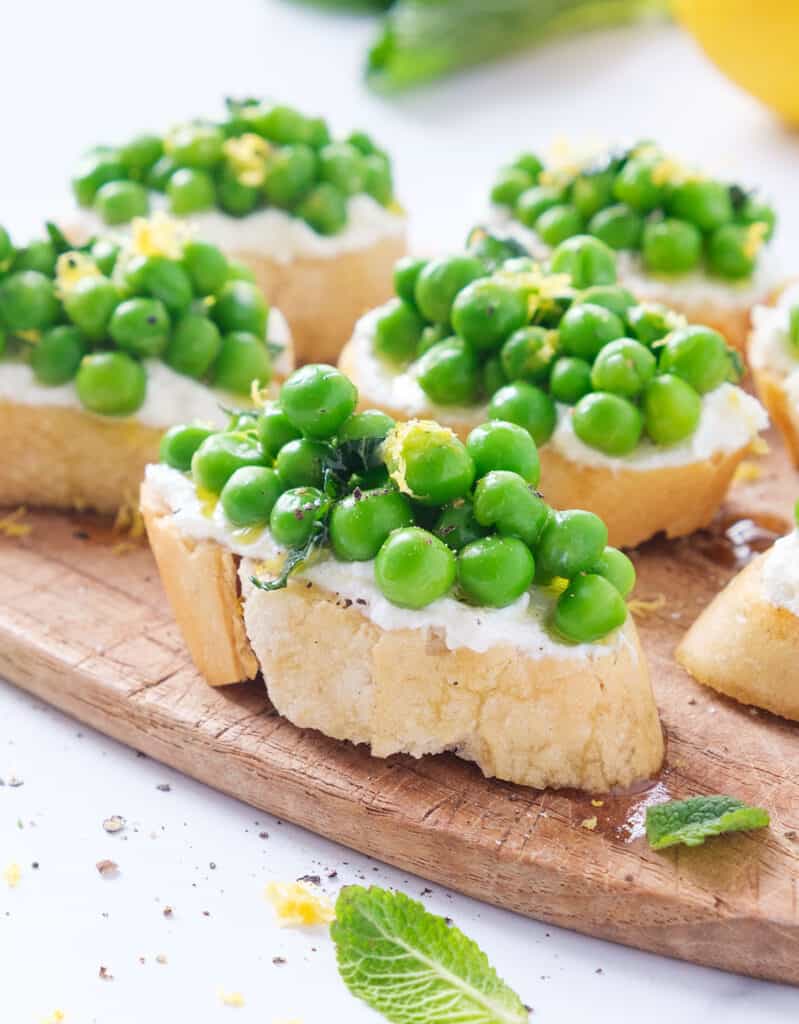
This crispy pea and ricotta costini recipe makes a delicious canapé full of fresh flavor and with a lovely texture. The perfect spring appetizer or snack that is simple, easy, and vegetarian.
Published in February 2021/updated in May 2026
I love fresh and frozen peas. They’re sweet, nutritious, and rich in plant-based protein and fiber. I use them to whip up quick hummus, and this terrific one-pot pasta or creamy green soup for our weeknight meals.
Join my newsletter for free weekly recipes!
If you think that peas are boring, this simple recipe will surprise you at first bite. It’s fresh, delicious, inexpensive, and ready in no time.
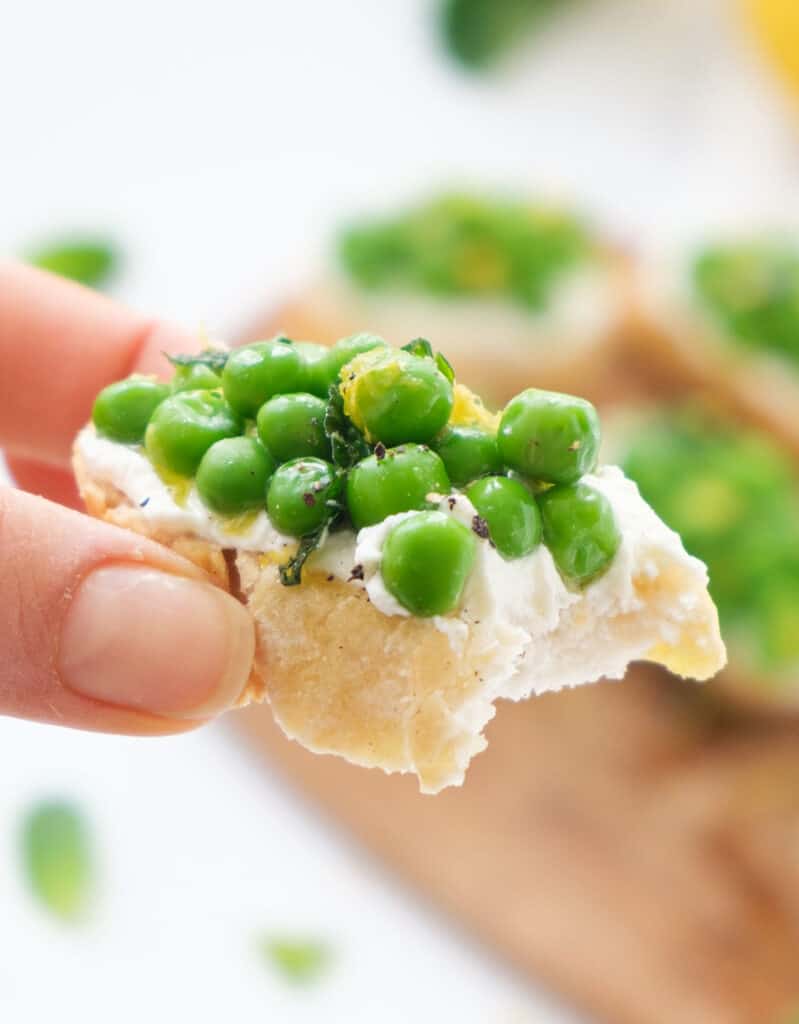
Crostini means “little crusts” in Italian. They are small slices of bread toasted until crisp. In this recipe, they are piled with creamy ricotta, tender peas, lemon zest, and fresh mint.
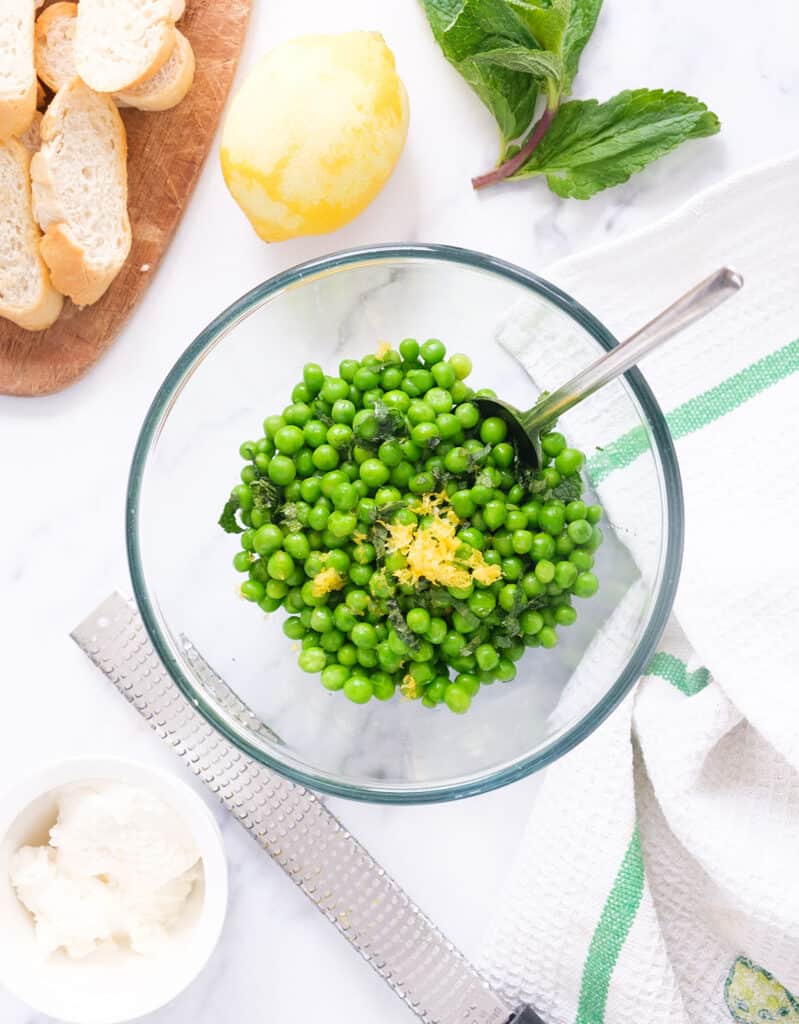
All you have to do is toast your bread, blanch the peas, and toss them with good olive oil—preferably extra virgin olive oil—lemon zest, mint, and seasoning. Then, top the crostini with soft ricotta and the bright peas.
These crostini with ricotta and peas are ready and absolutely perfect for a quick yet filling meal or any gathering year-round.
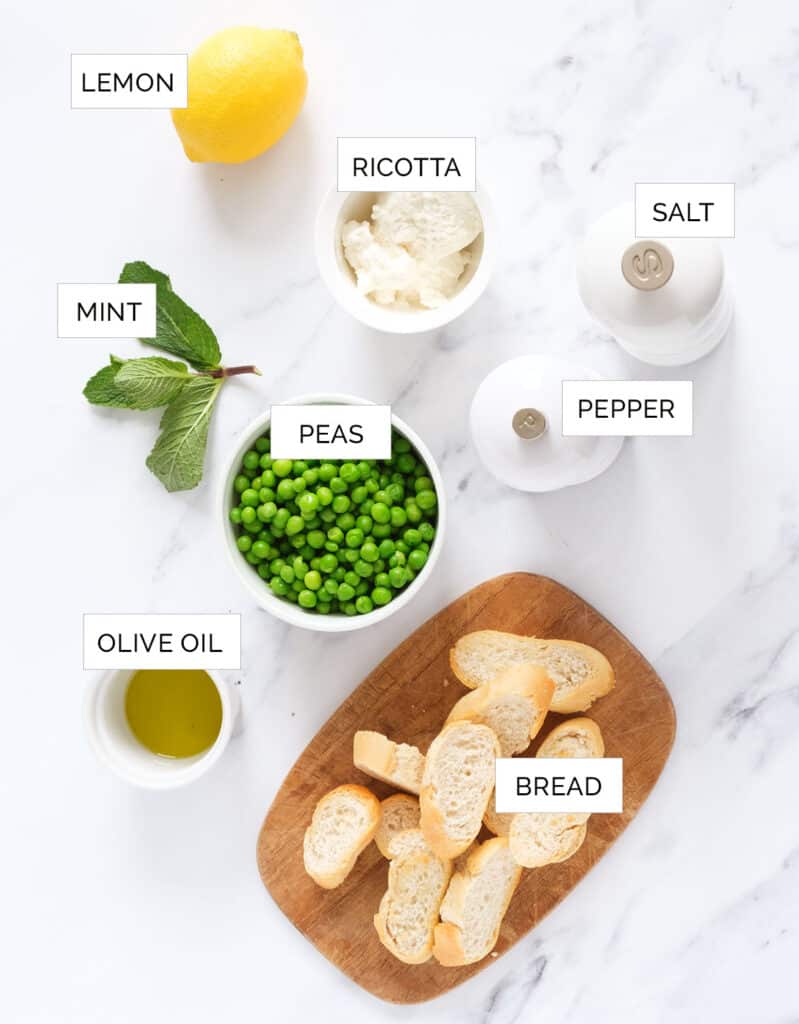
List of the ingredients
- A small baguette
- Fresh or frozen peas
- Ricotta cheese
- Lemon zest
- Fresh mint
- Extra virgin olive oil
- Salt & pepper
How to make crostini
(Note: the full recipe is at the bottom of the post)
- Bake the slices of bread until crisp.
- Blanch the peas in boiling water.
- Drain and rinse them with cold water (to preserve their bright color).
- Toss the peas with olive oil, lemon zest, mint, salt, and pepper.
- Top the crostini with ricotta and peas, and serve!
RECIPE NOTES
Pea & Ricotta Crostini Ingredients
Bread: A seeded or regular baguette is perfect. The baguette should be small enough that once sliced, the slices are pretty small, like canapés. Cut into ½-inch slices, brush them with extra-virgin olive oil, and toast them in the oven. Alternatively, you can toast them in a frying pan with some olive oil… I love that nutty flavor!
Peas: Either fresh or frozen peas work. Frozen peas are fine with almost any recipe; they’re delicious, convenient, and have pretty much the same health benefits as their fresh counterpart.
Ricotta: Fresh ricotta is fresh, slightly tangy, and makes a wonderful base for the lemon and pea topping.
Extra-virgin olive oil: The least processed form of olive oil, healthy and full of flavor, is definitely the best, in my opinion.
Lemon zest and fresh mint: They make the difference, don’t skip them. I use this grater for the lemon zest, it’s amazing, but any other fine grater would work.
Can I make pea and ricotta crostini ahead of time?
These crostini are perfect for a party, and you can make a large batch of the topping ahead of time, even the day before.
However, since the topping is very moist, you want to assemble the crostini at the last minute, so the bread doesn’t go soft.
If you have ricotta leftovers…
If you wonder what to do with ricotta leftovers, I’ve got you covered with these delicious lemon ricotta pasta, pasta with zucchini or sun-dried tomato pesto or herbed whipped ricotta and ricotta crostini. We don’t waste anything! : )
Looking for more vegetarian or vegan appetizers?
If you love party food and appetizers full of vegetables and flavor (I do!), check out this fantastic collection of Italian appetizers or 50+ vegan appetizers! Plus, I’ve dropped here some of my favorite bruschetta and dip recipes for you, delicious and inexpensive:
If you make these pea and ricotta crostini or have any questions, let me know! Leave a comment, send me a message, or rate it.
I would love to hear from you!
For more recipe updates, subscribe to my newsletter and follow me on Instagram, Pinterest, and Facebook.
Crostini with ricotta & Peas
Servings: 12 crostini
Calories: 129kcal
- 12 small slices of baguette, about ½ inch thick (even thinner if you wish)
- 1-2 Tbsp extra virgin olive oil, as needed
Crostini
-
Preheat the oven to 340°F/170°C (it’s better not to use the broiler since it could easily burn the bread) and line a baking sheet with parchment paper.
-
Use a serrated knife and cut the baguette into thin slices, about ½ inch or even a bit thinner if you wish. Lightly brush each side of each slice with extra virgin olive oil.
-
Place the slices on a single layer on the baking sheet and bake until crisp and slightly golden, it takes about 6-7 mins, keep an eye on them. Remove from the oven and let them cool.
Topping
-
Bring a small pot with water to a boil and blanch the peas for about 1 minute or until tender. Drain, rinse them with cold water straight away to preserve their bright color, and drain well again.
-
Place the peas into a bowl and add the lemon zest, the shredded mint leaves, extra virgin olive oil, salt and pepper. Taste and adjust the flavor and the seasoning according to your liking until the flavor pops up.
-
Spread a thick layer of ricotta on top of each slice of bread, than top with the peas, and drizzle with extra virgin olive oil or extra lemon zest if you wish. Serve immediately.
Calories: 129kcal | Carbohydrates: 17g | Protein: 5g | Fat: 5g | Saturated Fat: 1g | Polyunsaturated Fat: 1g | Monounsaturated Fat: 2g | Cholesterol: 5mg | Sodium: 368mg | Potassium: 75mg | Fiber: 1g | Sugar: 2g | Vitamin A: 121IU | Vitamin C: 4mg | Calcium: 57mg | Iron: 1mg
Join my newsletter for free weekly recipes!
PakarPBN
A Private Blog Network (PBN) is a collection of websites that are controlled by a single individual or organization and used primarily to build backlinks to a “money site” in order to influence its ranking in search engines such as Google. The core idea behind a PBN is based on the importance of backlinks in Google’s ranking algorithm. Since Google views backlinks as signals of authority and trust, some website owners attempt to artificially create these signals through a controlled network of sites.
In a typical PBN setup, the owner acquires expired or aged domains that already have existing authority, backlinks, and history. These domains are rebuilt with new content and hosted separately, often using different IP addresses, hosting providers, themes, and ownership details to make them appear unrelated. Within the content published on these sites, links are strategically placed that point to the main website the owner wants to rank higher. By doing this, the owner attempts to pass link equity (also known as “link juice”) from the PBN sites to the target website.
The purpose of a PBN is to give the impression that the target website is naturally earning links from multiple independent sources. If done effectively, this can temporarily improve keyword rankings, increase organic visibility, and drive more traffic from search results.



Leave a Reply