


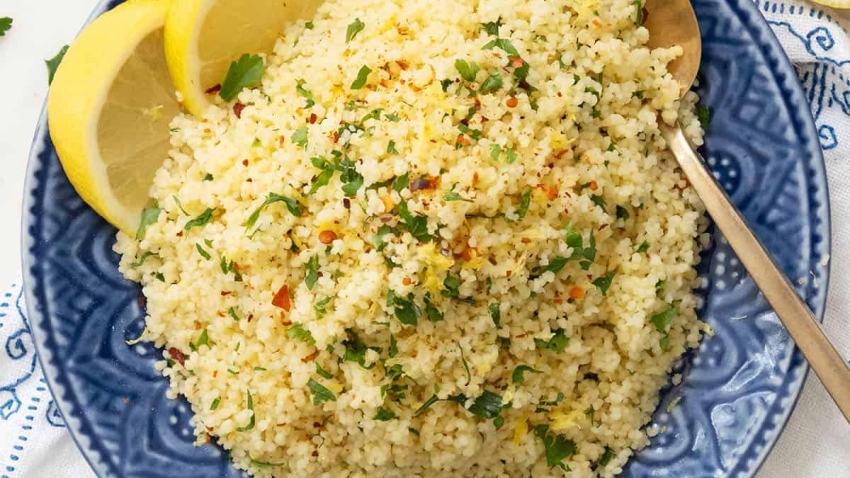
Lemon Couscous – The clever meal
This post may contain affiliate links. Please read my disclosure policy for more details.
This fresh-and-flavorful lemon couscous salad is super easy, fast to make, and budget-friendly. It’s a delicious summer salad and side dish that is a breeze to customize, keeps well for days, and requires no cooking.
Published in Aug 2020/updated in May 2026
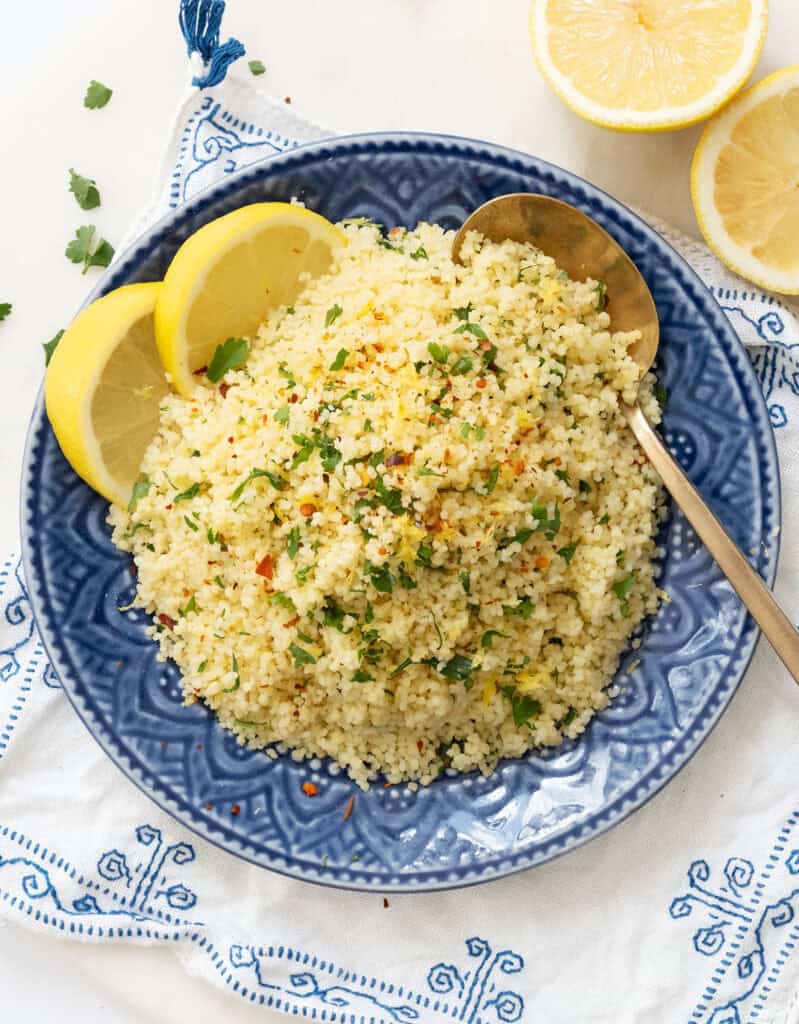
Really, I can’t think of a better recipe to re-share now that summer is just around the corner. A simple, lemon couscous recipe that uses minimal ingredients, minimal prep, and it’s a no-brainer to throw together and to customize.
Join my newsletter for free weekly recipes!
It makes a summer salad that is so fresh and flavorful, truly one of the easiest side dish recipes, perfect for potlucks, picnics, BBQs, and all the upcoming summer gatherings.
Here is the deal. Simply cover the cous cous with a little boiled water or vegetable broth, let it sit for about 5-8 minutes, then fluff with a fork, and stir in the lemon-garlic dressing and herbs before serving.
It’s done!
And I LOVE how customizable and versatile this salad recipe can be. Once you make your lemon couscous, you can add just about anything from veggies to protein to make it more substantial, colorful, crunchy, and oh-so-delicious!
And it’s great for lunch or dinner, chilled straight from the fridge; it can be a main dish, a side dish, a BBQ dish – pretty much anything you want it to be.
Now, let’s see how to make it!
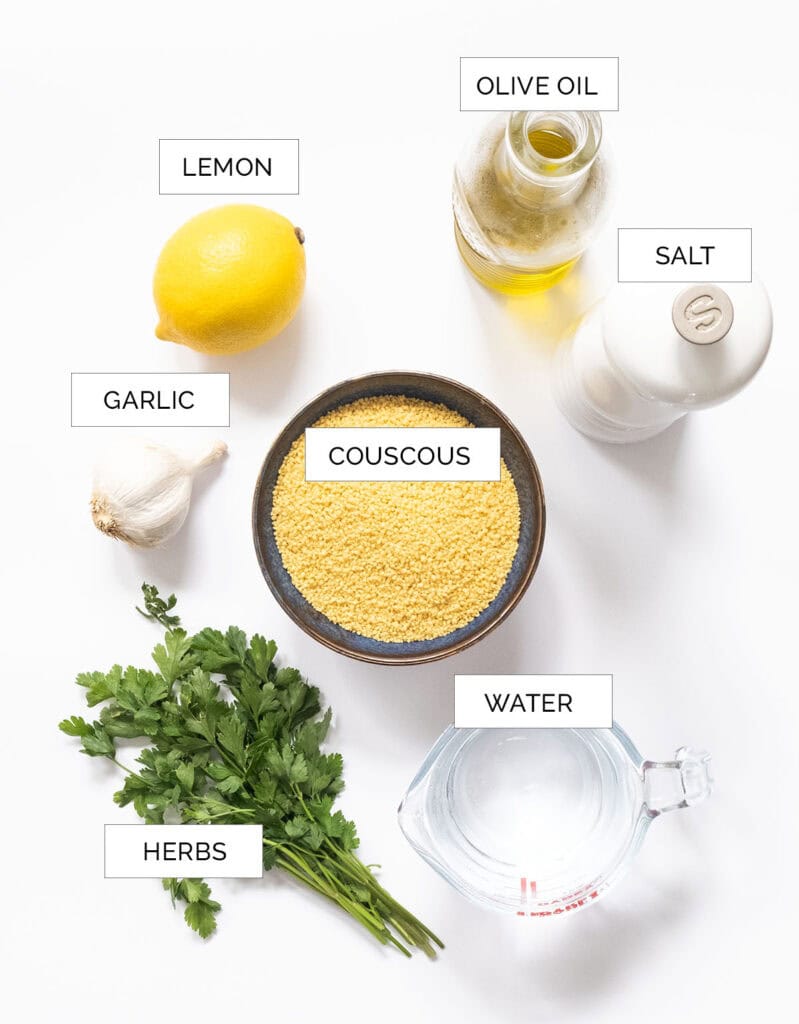
List of the ingredients
- Couscous
- Water
- Olive oil
- Garlic
- Lemon
- Parsley
- Salt
How to Make Lemon Couscous
(Note: this is a quick description; the full recipe is at the bottom of the page.)
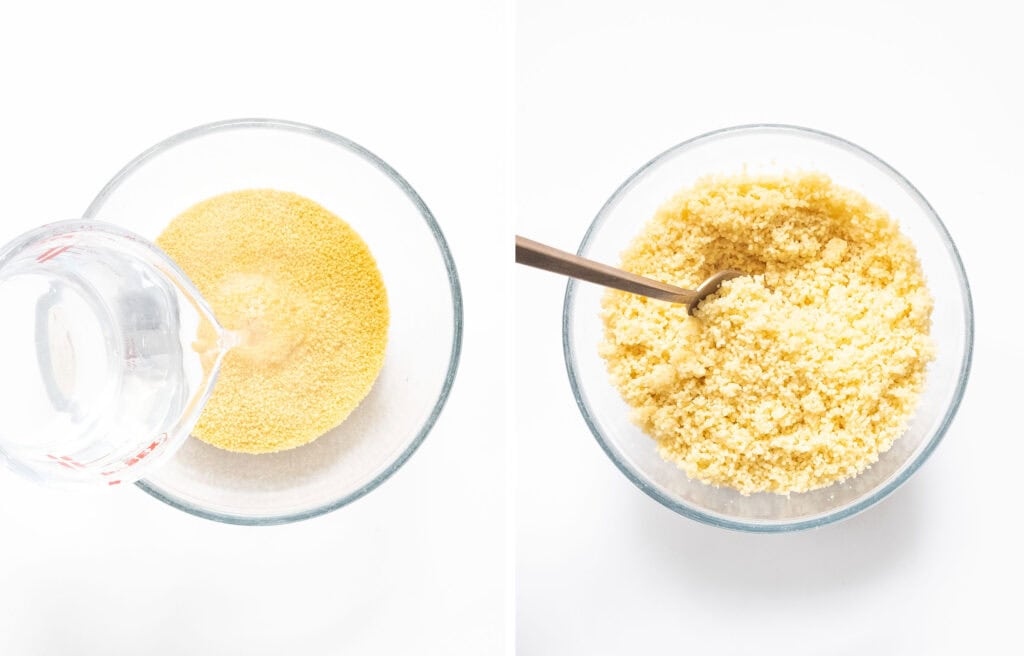
- Add the boiling water to the couscous.
- Cover with a lid and let it stand.
- Fluff with a fork.
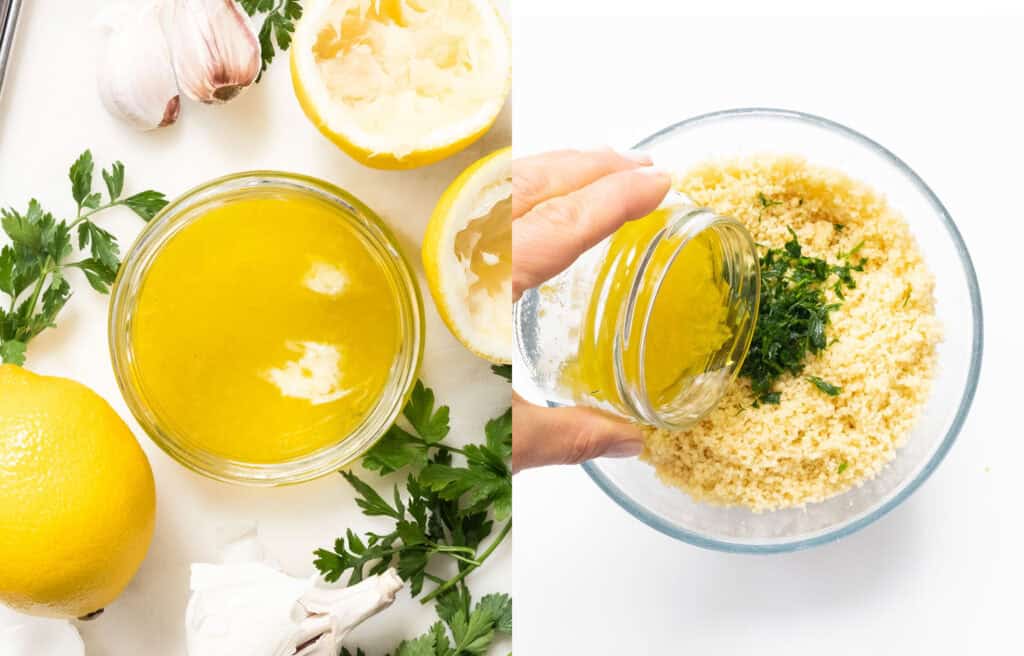
- Make the lemon garlic dressing.
- Add the dressing and the parsley, and toss until well combined. Done!
Recipe notes
What’s couscous?
Although it looks like a grain, couscous is made with semolina flour, so it’s basically like tiny pasta that cooks very quickly! It’s a staple in the Northern African cuisine. When possible, look for whole-wheat couscous. This makes it the healthiest option; it’s rich in nutrients and fiber, and it will keep you fuller for longer.
Ingredients & Substitutions
Couscous: I usually go for the regular couscous, which is a no-brainer to make: just add boiling water from a kettle. But Israeli couscous, also called pearl couscous, would be great here as well, although it needs to be cooked on the stove.
Dressing: A vinaigrette made with lemon juice and zest, grated garlic, seasonings, and olive oil. It’s simple but full of delicious, bright flavor. For the best flavor, I recommend using extra-virgin olive oil and fresh juice (not bottled!).
Fresh herbs: You can use chopped dill, mint, chives, or cilantro instead of parsley if you wish, but make sure to use fresh, not dried, herbs.
Lemon Couscous salad variations
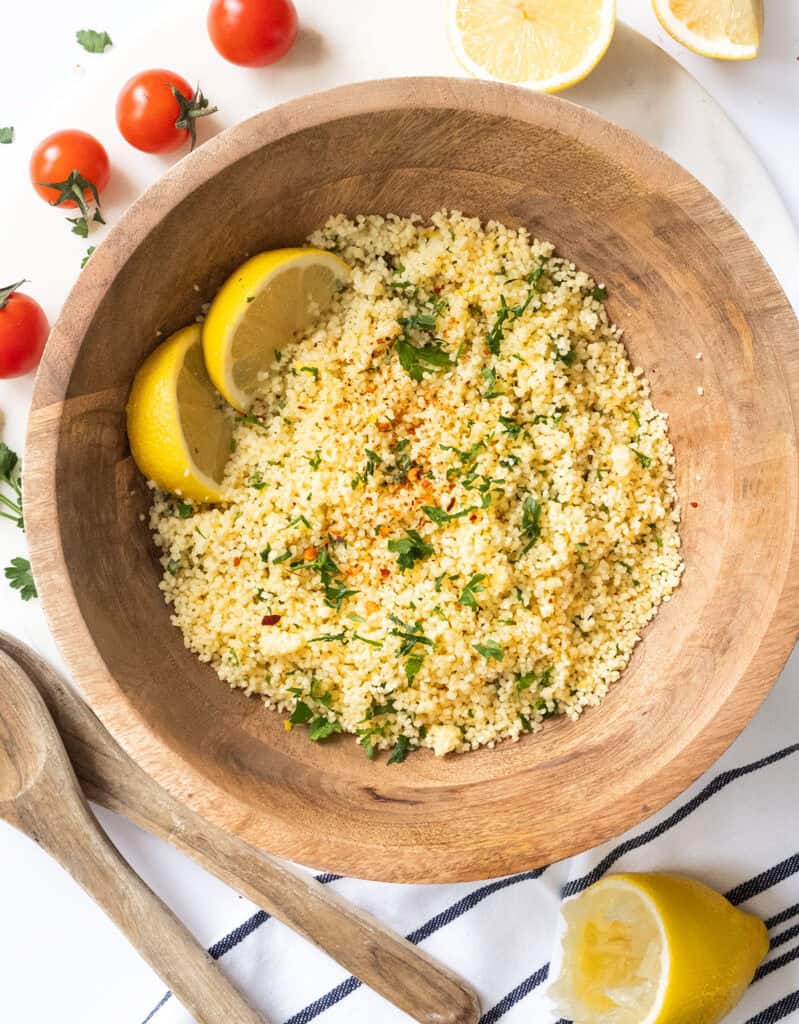
This simple lemon couscous salad is delicious as is, but you can mix it up with veggies or protein of your choice. These ingredients go so well with couscous and bulk it out a bit more:
- Produce: Add your favorite summer veggies, such as grilled vegetables, sweet corn, roasted peppers, cherry tomatoes, grated carrots, cucumber, onion, and avocado. As you fancy some greens, add chopped arugula or baby kale… the sky is the limit!
- Plant-based protein: Lentils and chickpeas are great for couscous, but you can also add white or black beans, or even peas!
- More flavor & texture: Golden raisins, apricots, toasted almonds or pistachios (inspired by Moroccan couscous), are absolutely delicious in couscous. But feta, goat cheese, sun-dried tomatoes, pecans, and seeds such as pepitas (aka pumpkin seeds) are incredible and give your salad a more Mediterranean twist.
- Extra boost of protein: If you’re not vegetarian, rotisserie or grilled chicken, grilled salmon, or shrimp will pair so well with lemon couscous.
Storage tips
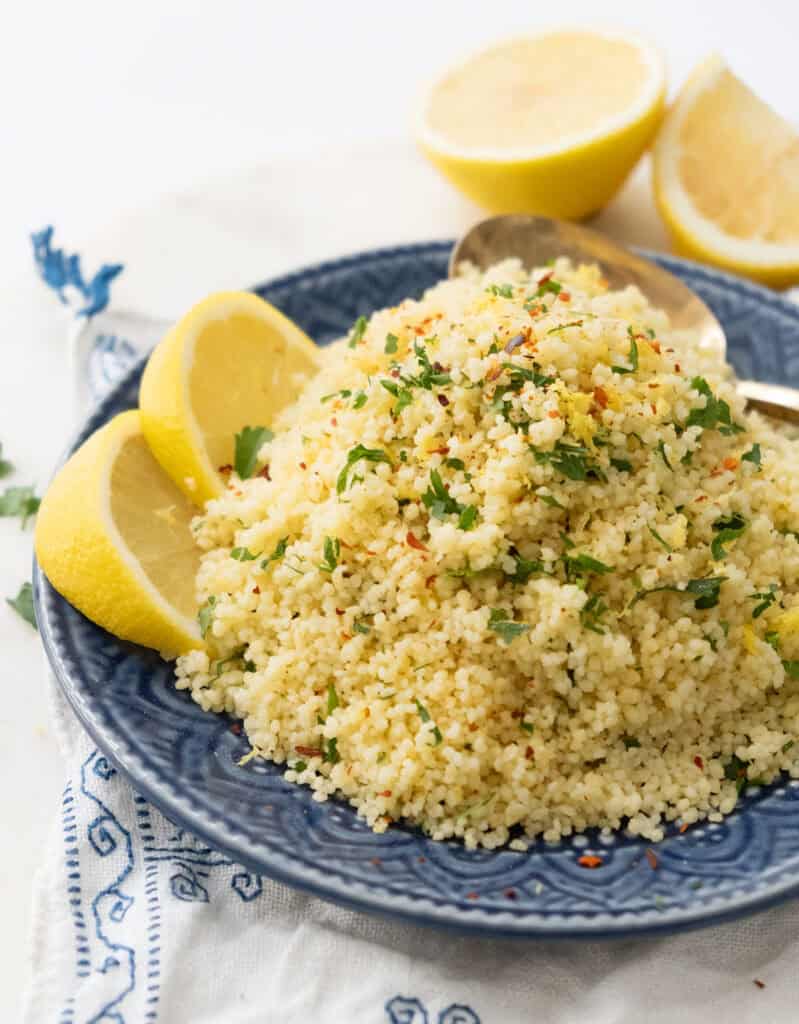
Store in an airtight container in the fridge. It keeps very well for up to 4 days; fluff it again with a fork before serving, then drizzle with olive oil. It’s brilliant because you can meal prep it and take it to work for the next few days, or make it ahead for a summer party!
More easy salad recipes
If you make this lemon couscous recipe, let me know! Leave a comment, rate it, or tag a photo #theclevermeal on Instagram. I would love to hear from you!
For more recipe updates, subscribe to my newsletter and follow me on Instagram, Pinterest, and Facebook.
Lemon Couscous
This fresh-and-flavorful lemon couscous is super easy, fast to make, and budget-friendly. It’s a delicious summer salad and side dish that is a breeze to customize, keeps well for days, and requires no cooking.
Servings: 4 servings
Calories: 235kcal
Dressing
- 3 tablespoon lemon juice
- 1 lemon, zest
- ¼ teaspoon grated garlic
- 2 tablespoon extra virgin olive oil
- ⅛ tsp black pepper, plus more to taste
- 3 Tablespoon chopped parsley (cilantro or dill are fine)
-
Place the cous cous into a large heatproof salad bowl (a metal or glass container is fine), add the salt, and pour boiling water or broth over it. Cover with a lid and leave for 8 minutes, or according to package directions, until fluffy and the liquid has been absorbed.
-
Fluff with a fork through the couscous until the grains are separated and fluffy.
Lemon dressing
-
Place all the dressing ingredients in a jar with a lid and give it a good shake.
-
Add the dressing and parsley to the couscous, then toss well to combine. Taste and adjust the seasoning according to your taste.
-
It’s ready to serve immediately, or you can refrigerate it until you’re ready to enjoy it. It can be served cold or at room temperature.
- Couscous: usually the couscous to water ratio is 1:1; however, different brands might vary in the proportion of liquid. Make sure you read the package instructions and adjust the recipe accordingly.
Note: the nutritional values are only estimates for 1 serving. They are provided by an online nutrition calculator and should not be considered a substitute for a nutritionist’s advice.
Calories: 235kcal | Carbohydrates: 36g | Protein: 6g | Fat: 7g | Saturated Fat: 1g | Polyunsaturated Fat: 1g | Monounsaturated Fat: 5g | Sodium: 296mg | Potassium: 90mg | Fiber: 2g | Sugar: 0.3g | Vitamin A: 1IU | Vitamin C: 6mg | Calcium: 14mg | Iron: 1mg
Join my newsletter for free weekly recipes!
PakarPBN
A Private Blog Network (PBN) is a collection of websites that are controlled by a single individual or organization and used primarily to build backlinks to a “money site” in order to influence its ranking in search engines such as Google. The core idea behind a PBN is based on the importance of backlinks in Google’s ranking algorithm. Since Google views backlinks as signals of authority and trust, some website owners attempt to artificially create these signals through a controlled network of sites.
In a typical PBN setup, the owner acquires expired or aged domains that already have existing authority, backlinks, and history. These domains are rebuilt with new content and hosted separately, often using different IP addresses, hosting providers, themes, and ownership details to make them appear unrelated. Within the content published on these sites, links are strategically placed that point to the main website the owner wants to rank higher. By doing this, the owner attempts to pass link equity (also known as “link juice”) from the PBN sites to the target website.
The purpose of a PBN is to give the impression that the target website is naturally earning links from multiple independent sources. If done effectively, this can temporarily improve keyword rankings, increase organic visibility, and drive more traffic from search results.







Leave a Reply