


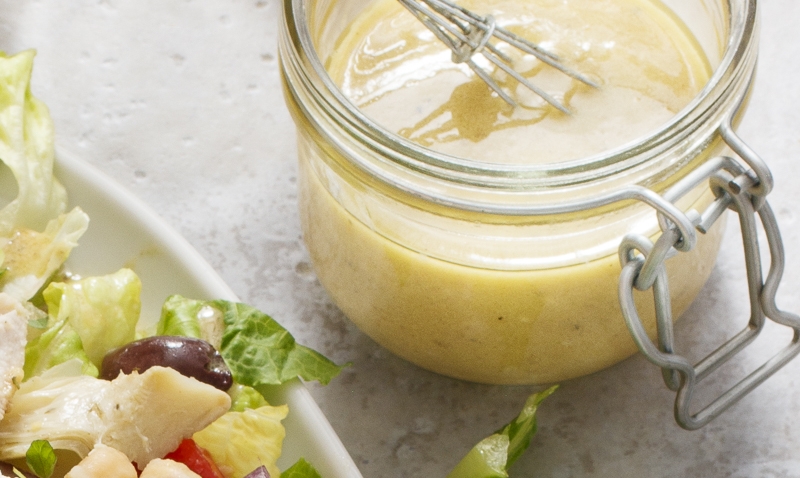
How and why to make salad dressing / Jill Silverman Hough
I believe that if each of us cooked just a little more, not only would our lives be happier and more satisfying, but it could make the world a better place.
I’m not suggesting you churn your own butter or mill your own flour. I’m just saying that however you currently put food on the table, it might make a difference in your life and others’ if you do a little more and outsource a little less. Whatever that means to you.
One crazy-easy way to do that? Homemade salad dressing.
Salad dressing is basically fat and acid. Two ingredients you already have on hand, probably in many forms. Olive oil, coconut oil, peanut oil, sesame oil, grapeseed oil, mayonnaise, red wine vinegar, white wine vinegar, balsamic vinegar, lemon juice, lime juice, buttermilk, and wine—to name just a few.
So then, here’s how you make salad dressing
1. Combine one or two fats with one or two acids, season with salt and pepper, and—done!
Seriously, it’s that easy.
I mean, you buy quality ingredients in the first place, right? So why not dress them simply and let their natural flavors shine through? Making your own is almost as quick as opening a bottle of Wish-Bone and about a gazillion times more satisfying. Not to mention totally unpronounceable ingredient-free.
Want to make that easy method even easier? Do what I do. Drizzle olive oil and vinegar right on your salad, sprinkle with salt and pepper, toss, taste, and adjust as necessary.
How much fat and acid? A traditional proportion is two or three parts fat to one part acid—but it varies according to the intensity of the acid and your taste. So mix something up, notice what you like, and it’ll be that much quicker next time.
If you want to dress up your dressing, a traditional vinaigrette might include minced shallot. Or minced garlic. Or both.
You could add chopped fresh herbs, dried herbs, or spices. Add buttermilk and/or mayonnaise to make your dressing creamy. Add honey, sugar, or other sweeteners to make it sweet.
Dijon mustard will add zing and can help your dressing emulsify—keep it from separating—as can egg yolks.
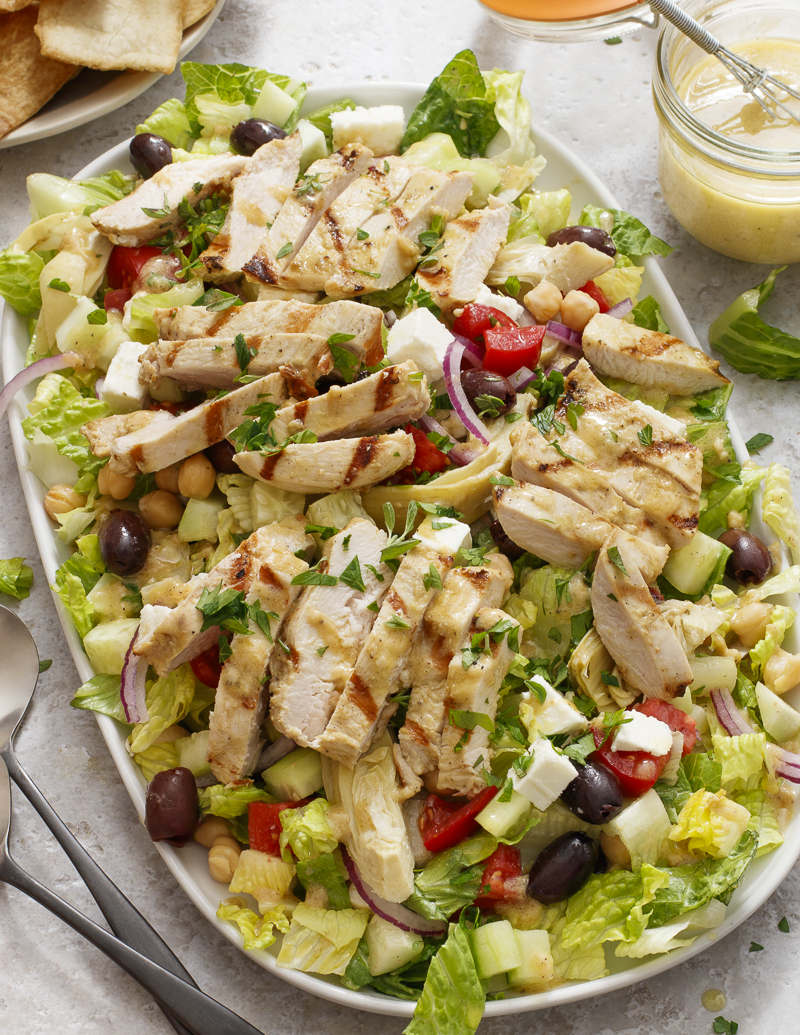
Ninety percent of the time, I just do olive oil and vinegar right on the greens. But some of the dressings I actually make include Caesar, blue cheese, and Doug’s Dijon Dressing (featured in this post).
(Actually, perhaps not surprisingly, Doug usually makes the Doug’s Dijon. But we used to make it at my café by the gallon—for leafy greens, yes, but we dabbed it around other places, too. Its bold flavor added oomph to potato salad, green bean salad, and our Greek-inspired tomato-cucumber salad. It’d also be good drizzled over steak or seared ahi, stirred into egg salad, mixed with mayo for a dipping sauce, or smeared onto a sandwich. Last but definitely not least, My Big Fat Greek Salad, Chopped and with Chicken [above] is an absolute celebration of Doug’s Dijon, using it as both a salad dressing and a marinade for the chicken. Yay for Doug and Dijon!)
You really, really, really don’t need a recipe for salad dressing, but if you insist, here’s a bunch more from the good folks at The Kitchn.
Try a recipe, or try making your own. Mostly, try. Salad dressing is a super easy way to put more homemade food on the table.
And yay for that.

PakarPBN
A Private Blog Network (PBN) is a collection of websites that are controlled by a single individual or organization and used primarily to build backlinks to a “money site” in order to influence its ranking in search engines such as Google. The core idea behind a PBN is based on the importance of backlinks in Google’s ranking algorithm. Since Google views backlinks as signals of authority and trust, some website owners attempt to artificially create these signals through a controlled network of sites.
In a typical PBN setup, the owner acquires expired or aged domains that already have existing authority, backlinks, and history. These domains are rebuilt with new content and hosted separately, often using different IP addresses, hosting providers, themes, and ownership details to make them appear unrelated. Within the content published on these sites, links are strategically placed that point to the main website the owner wants to rank higher. By doing this, the owner attempts to pass link equity (also known as “link juice”) from the PBN sites to the target website.
The purpose of a PBN is to give the impression that the target website is naturally earning links from multiple independent sources. If done effectively, this can temporarily improve keyword rankings, increase organic visibility, and drive more traffic from search results.







Leave a Reply