


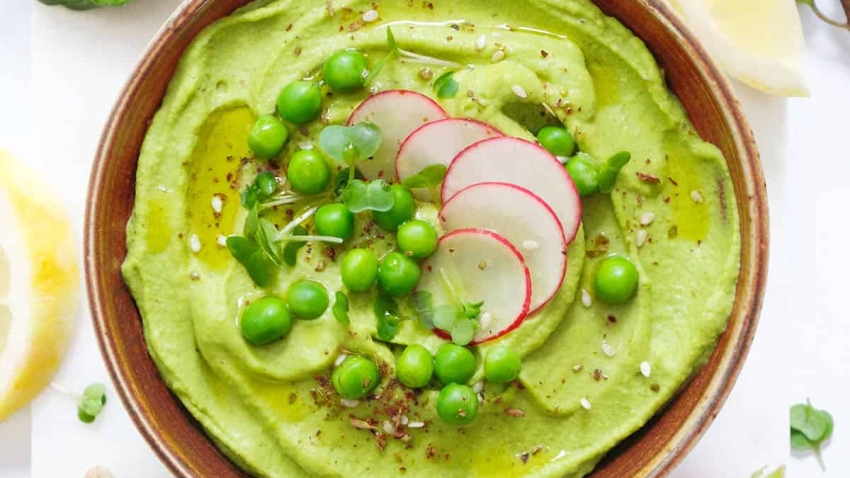
Green Pea Hummus – The clever meal
This post may contain affiliate links. Please read my disclosure policy for more details.
You’ll love this fresh, quick, and easy green pea hummus. It’s full of plant-based protein and makes a gorgeous vegan and gluten-free dip ready in 10 minutes.
Published in Jun 2024/Updated in July 2026
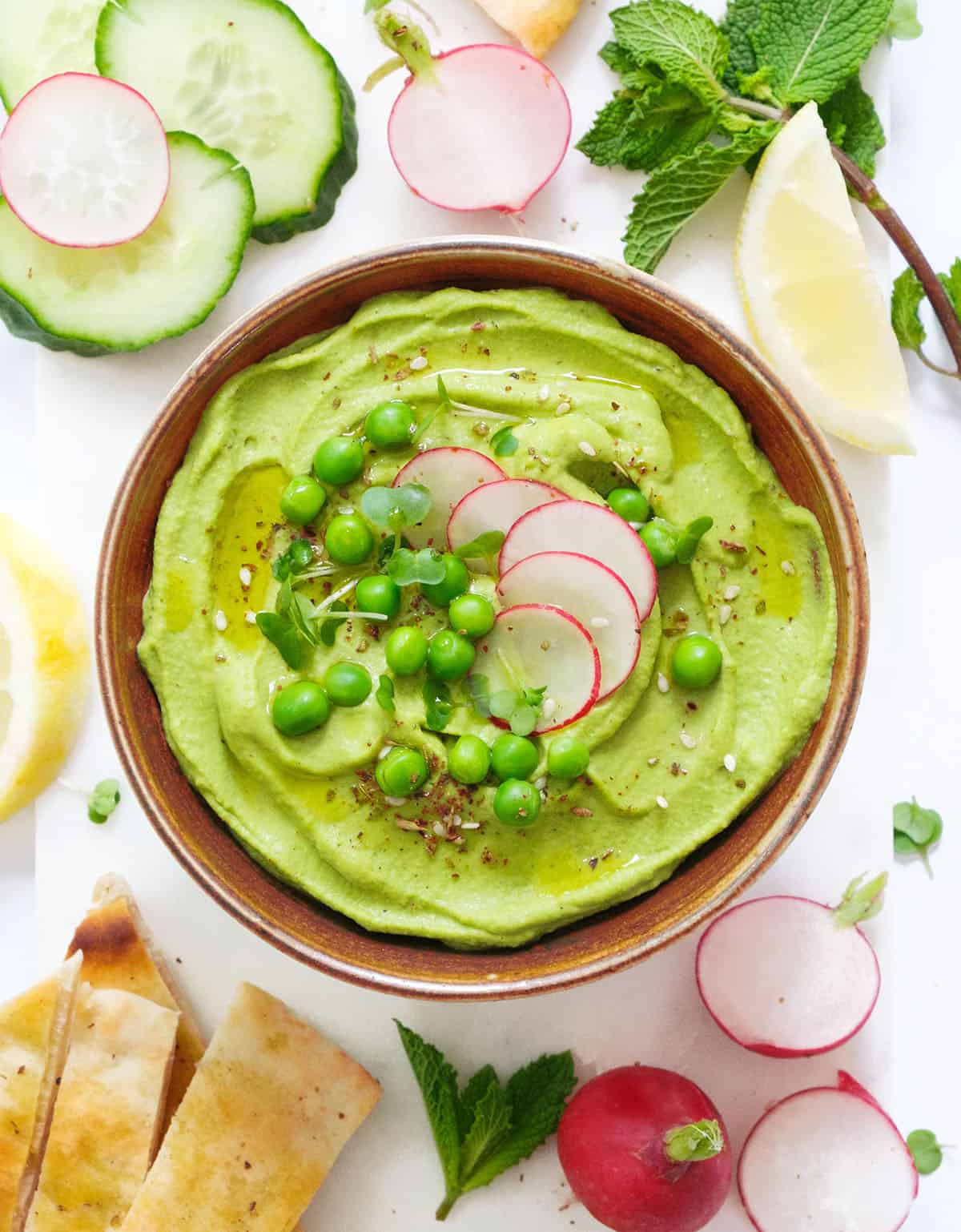
It’s still unbelievably hot here in London, and fresh and quick recipes are definitely a must. I thought I’d share this lovely and quick pea hummus, which has been one of our favorite dips recently.
Join my newsletter for free weekly recipes!
It’s very easy to whip up, has a wonderful Middle Eastern flavor, and is super versatile. I promise even hummus haters, including kids, will go back for seconds of this dip!
The main ingredient of this hummus is, of course… PEAS. Once blended, these budget-friendly, healthy legumes turn soft and deliciously creamy.
Apart from the peas, the recipe uses the standard ingredients for hummus: tahini paste, garlic, extra-virgin olive oil, and fresh lemon juice, plus seasoning, of course.
Lastly, to jazz it up, I add mint leaves for freshness and some Zaatar for hearty, citrusy notes. This fragrant Middle Eastern spice blend adds another dimension to this vegan dip, making it more flavorful.
You’ll love dipping crispy crackers into this creamy green pea hummus. It can be a spread, dip, or a delightful vegan appetizer when served with colorful vegetables, and it’s sure to please a crowd.
List of ingredients
- Peas
- Mint leaves
- Tahini paste
- Lemon
- Extra virgin olive oil
- Garlic
- Zaatar
- Salt & pepper

How to make green pea hummus
(Note: this is a quick description; the full recipe is at the bottom of the page.)
- Place all the ingredients into a food processor or a blender. I recommend using a high-speed blender, such as a Vitamix, for the best texture.
- Puree until creamy and fluffy.
- Taste and make sure you’re happy with the final flavor.
- Enjoy these golden crostini, crispy breadsticks, pita bread, and fresh veggies, or serve them as a party appetizer.

Recipe notes
INGREDIENTS & SUBSTITUTIONS
Peas: Frozen peas are ideal for this recipe, as they’re nutritious, convenient, and available year-round. I wouldn’t use canned peas as a substitution. Their color is quite dull, and so is their flavor. However, although the recipe only calls for peas, white beans or a can of chickpeas would work in place of the peas.
Garlic: It’s the key to every hummus recipe. Don’t skip the garlic!
Tahini: This paste, made from sesame seeds, is another essential ingredient that lends hummus its richness and perfect texture.
Lemon juice and zest: They add the perfect flavor balance, fresh and bright, which pairs so well with the sweetness from the peas.
Extra-virgin olive oil: It’s the best for both flavor and nutrition. I don’t recommend using any other oil for this green pea hummus.
Fresh mint leaves: Their fresh, aromatic notes pair beautifully with peas. I’ve already used this classic combination in my pea soup and crostini. I love it.
Zaatar: It’s a Middle Eastern blend of savory dried herbs, cumin, coriander, sesame seeds, and sumac. This combination of spices and herbs is largely available, and its herbal earthiness and citrus notes make this hummus anything but boring. However, it might not be a pantry staple for many, so feel free to skip this step if you don’t have zaatar on hand.
Salt and pepper: As usual, check the overall flavour. If necessary, add a bit more salt or lemon juice to taste.
Note: Frozen peas are blanched during the freezing process, but they’re not fully cooked. I recommend cooking them to enhance their flavor and to ensure they’re safe to eat.

Leftovers & storage tips
It keeps well and bright in an airtight container for 3 days. It’s not freezer-friendly. If you make this dip ahead, give it a quick stir and drizzle with extra-virgin olive oil before serving, along with a sprinkle of Zaatar.
serving suggestions
- It’s an excellent dip for vegetables, pita bread, falafels, and crostini. It looks great on a platter alongside other colorful appetizers.
- It’s delicious in savory sandwiches, wraps, or spread on burgers or avocado on toast.
- Make crostini with a sprinkle of feta for a delightful appetizer.
- Add it to your favorite grain bowls for an extra boost of flavor and protein.

More dip and hummus recipes you’ll love
Get all of my delicious dip sauce recipes here!
Lastly, if you make this green pea hummus or have any questions, please let me know by leaving a comment. I would love to hear from you! x
For more recipe updates, subscribe to my newsletter and follow me on Instagram, Pinterest, and Facebook. If you make this recipe, don’t forget to tag me. : )
Green Pea Hummus
Servings: 6
Calories: 147kcal
- 2 cups (300 grams) Frozen peas
- 2 tablespoon (40 grams) tahini paste
- 4 tablespoon lemon juice
- ½ tablespoon lemon zest
- 3 tablespoon extra virgin olive oil
- 1 ½ teaspoon Zaatar, plus more to sprinkle
- 15 large mint leaves
- 1 small garlic clove
- ½ teaspoon salt, or to taste
- black pepper, to taste
-
Cook the peas according to their package directions. They take 2-3 minutes in boiling water and approximately 3 minutes in a microwave. Cook them just until tender but still bright green (don’t overcook), then rinse them in cold, runny water. Reserve 1 tablespoon of peas for garnishing if you wish.
-
Add all the ingredients to a high-speed blender or food processor. Pulse or blend until completely smooth. If anything gets stuck or the hummus appears too thick, simply add 1 tablespoon of olive oil or water.
-
Taste, make sure you’re happy with the seasoning. You might want to adjust the final flavor with a bit more salt or lemon juice. Blend again until well combined.
-
Transfer the green pea hummus to a small serving bowl, garnish with the reserved peas and a sprinkle of zaatar, and serve with crunchy veggies, crispy crackers, or pita bread. You can also store it in the fridge, ready for your next sandwiches and wraps. Enjoy!
Calories: 147kcal | Carbohydrates: 10g | Protein: 4g | Fat: 11g | Saturated Fat: 2g | Polyunsaturated Fat: 2g | Monounsaturated Fat: 6g | Sodium: 200mg | Potassium: 180mg | Fiber: 4g | Sugar: 3g | Vitamin A: 504IU | Vitamin C: 26mg | Calcium: 34mg | Iron: 2mg
Join my newsletter for free weekly recipes!
PakarPBN
A Private Blog Network (PBN) is a collection of websites that are controlled by a single individual or organization and used primarily to build backlinks to a “money site” in order to influence its ranking in search engines such as Google. The core idea behind a PBN is based on the importance of backlinks in Google’s ranking algorithm. Since Google views backlinks as signals of authority and trust, some website owners attempt to artificially create these signals through a controlled network of sites.
In a typical PBN setup, the owner acquires expired or aged domains that already have existing authority, backlinks, and history. These domains are rebuilt with new content and hosted separately, often using different IP addresses, hosting providers, themes, and ownership details to make them appear unrelated. Within the content published on these sites, links are strategically placed that point to the main website the owner wants to rank higher. By doing this, the owner attempts to pass link equity (also known as “link juice”) from the PBN sites to the target website.
The purpose of a PBN is to give the impression that the target website is naturally earning links from multiple independent sources. If done effectively, this can temporarily improve keyword rankings, increase organic visibility, and drive more traffic from search results.





Leave a Reply