


Artichoke Bruschetta – The clever meal
This post may contain affiliate links. Please read my disclosure policy for more details.
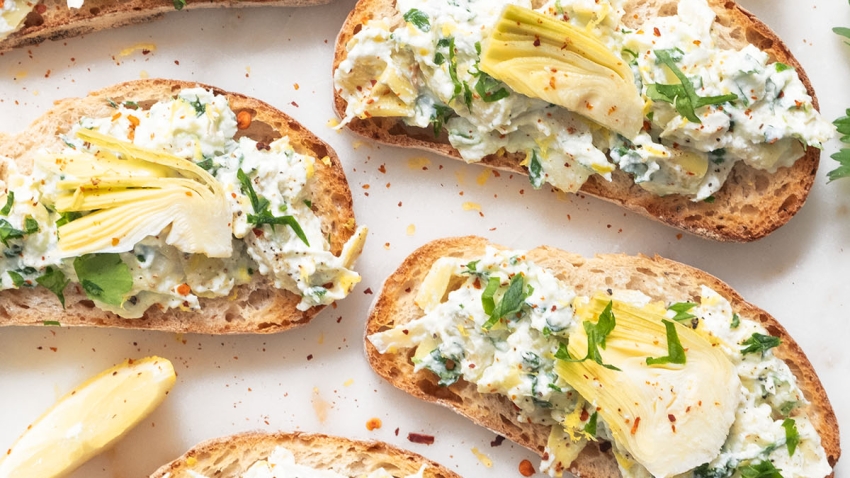
This artichoke bruschetta features crispy bread and scrumptious artichoke hearts, creamy ricotta, lemon juice, and herbs. It’s an easy Italian appetizer that tastes fresh, crunchy, and delicious.
Published in Dec 2021/Updated in June 2026
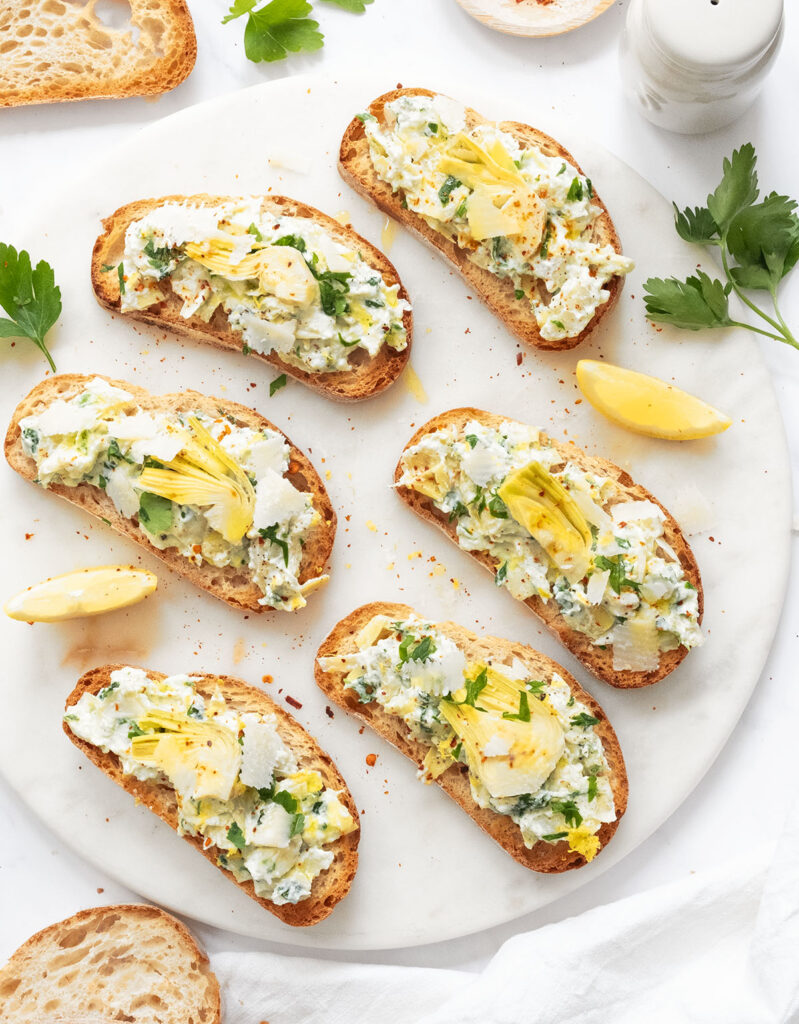
Crostini and bruschetta are some of the best party food ideas for festive holiday tables and summer get-togethers. They are so easy to assemble, bite-sized, and absolutely perfect for sharing!
Join my newsletter for free weekly recipes!
Guests can walk around and enjoy these goodies, and so can I, since I prepared them ahead of time!
For this artichoke bruschetta recipe, combine the artichoke topping ingredients in one bowl, then toast the bread slices until golden and crispy. Top them with the artichoke ricotta mixture, sprinkle with freshly ground black pepper, lemon zest, and parsley. You’re done!
This appetizer recipe is ridiculously easy, but it’s packed with delicious fresh flavor. The crispy bread and the creamy artichoke topping with hints of garlic and lemon are hard to resist.
So simple and so good, this artichoke bruschetta is truly the perfect vegetarian finger food for your next party!
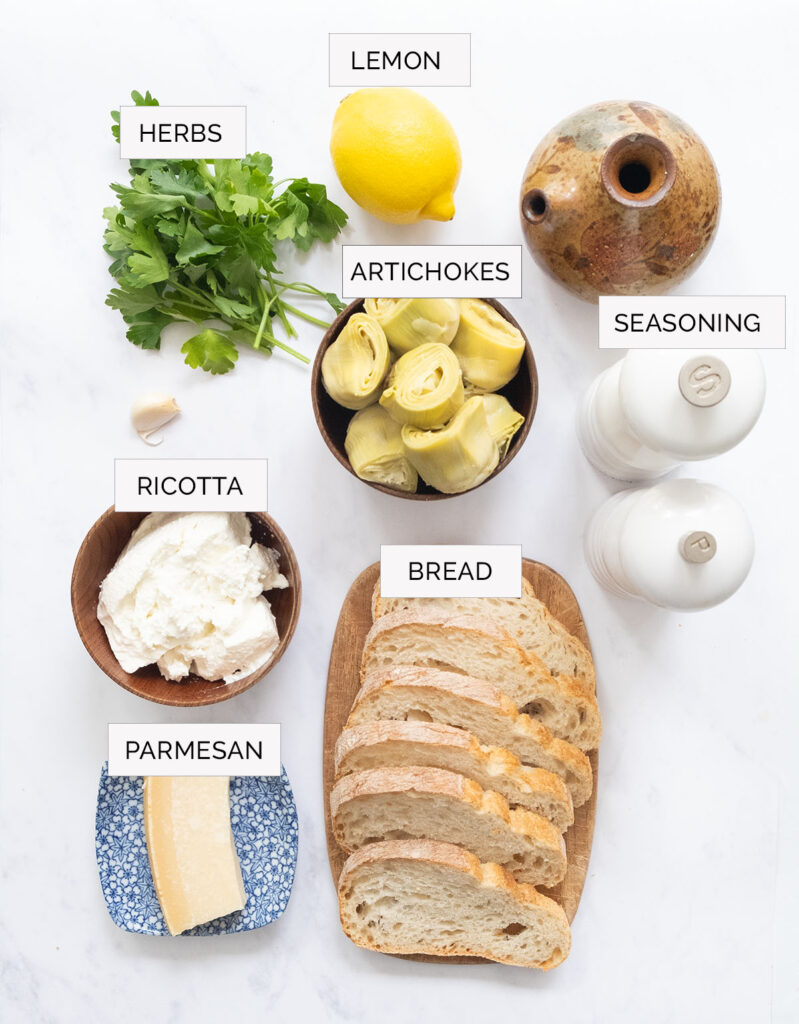
List of the ingredients
- Canned artichoke hearts
- Ricotta cheese
- Parmesan cheese
- Extra virgin olive oil
- Garlic
- Flat-leaf parsley
- Lemon zest and juice
- Salt & pepper
- Artisan bread
How to make artichoke bruschetta
(Note: this is a quick description; the full recipe is at the bottom of the page.)
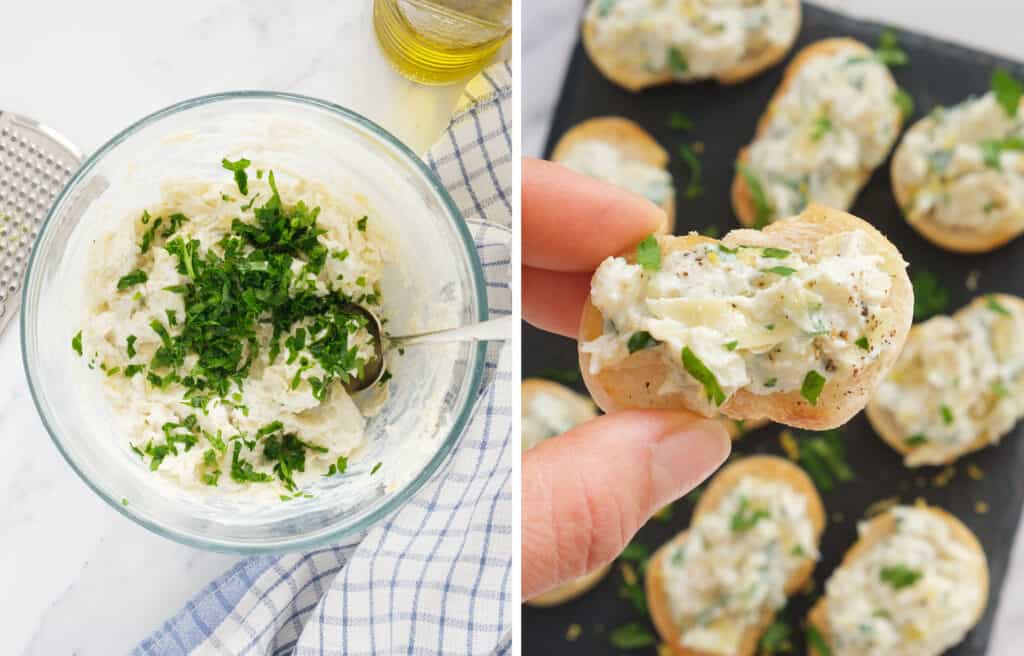
- Place ricotta, grated parmesan, salt, pepper, and garlic in one bowl.
- Add extra-virgin olive oil, lemon juice, and zest, then mix well until combined.
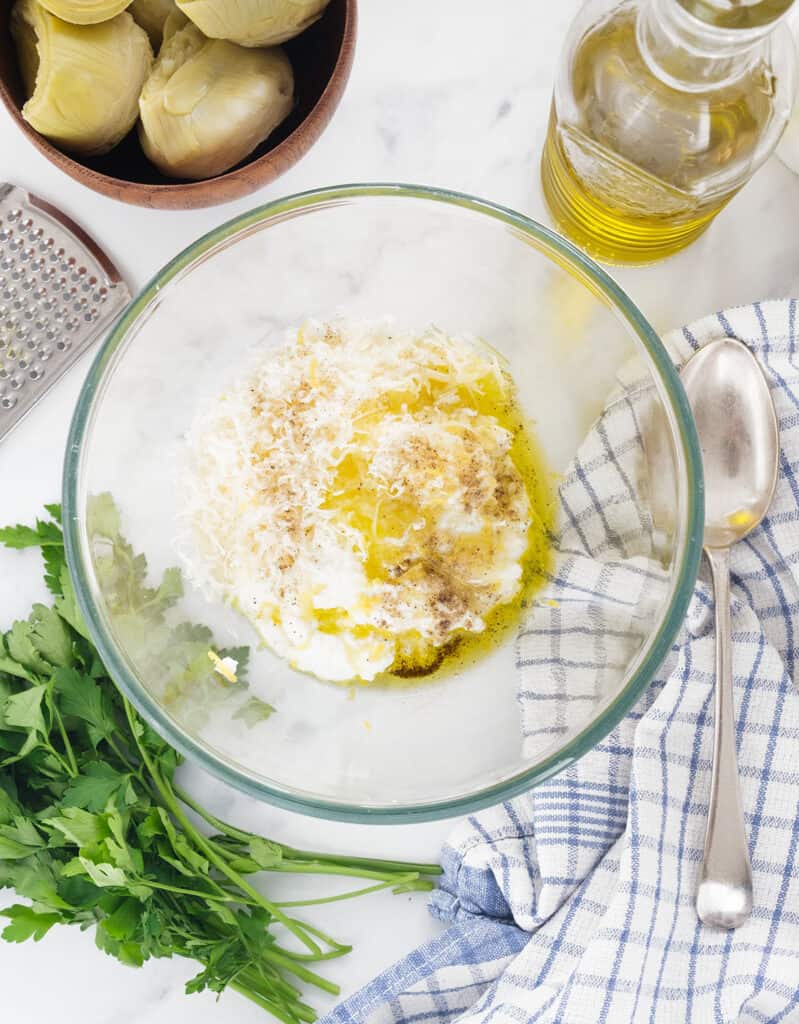
- Add chopped artichokes and parsley, stir again.
- Toast the bread slices in the oven, and top them with the artichoke mixture.
- Serve with freshly ground pepper, lemon zest, and chopped parsley. Enjoy!
Recipe notes
Artichoke bruschetta ingredients
Bread: Artisanal, crusty bread like sourdough or ciabatta is highly recommended for traditional bruschetta. French baguette slices work better for crostini, but they’re fine if you can’t find rustic bread. You can also use gluten-free bread as a substitute if you wish.
Canned artichoke hearts: You can use the same amount of frozen and thawed artichokes or jarred ones.
Ricotta cheese: Not all ricotta is created equal, and quality varies widely from brand to brand (I used Galbani). It’s very important to use ricotta cheese that tastes fresh and has a creamy, not grainy, texture. And if you have any ricotta leftovers, have a look at this collection of delicious ricotta recipes!
Parmesan cheese: It adds a rich umami flavor to the artichoke topping, and it makes the difference.
Lemon zest and juice: For a fresh, tangy flavor that goes so well with both ricotta and artichokes. Don’t skip the lemon!
Garlic: Go easy with garlic; we all love its pungent hit, but it might be too strong for the delicate artichokes. And never substitute fresh garlic with garlic powder when it comes to bruschetta and crostini.
Extra virgin olive oil: Use good-quality extra virgin olive oil for bruschetta, as its fruity flavor will shine through.
Flat-leaf parsley (aka Italian parsley) is much more aromatic than curly parsley and makes a big difference.
Salt & pepper: I’m generous with freshly ground black pepper when I use artichokes in my recipes, but feel free to adjust the seasoning to your taste.
Difference between bruschetta and crostini
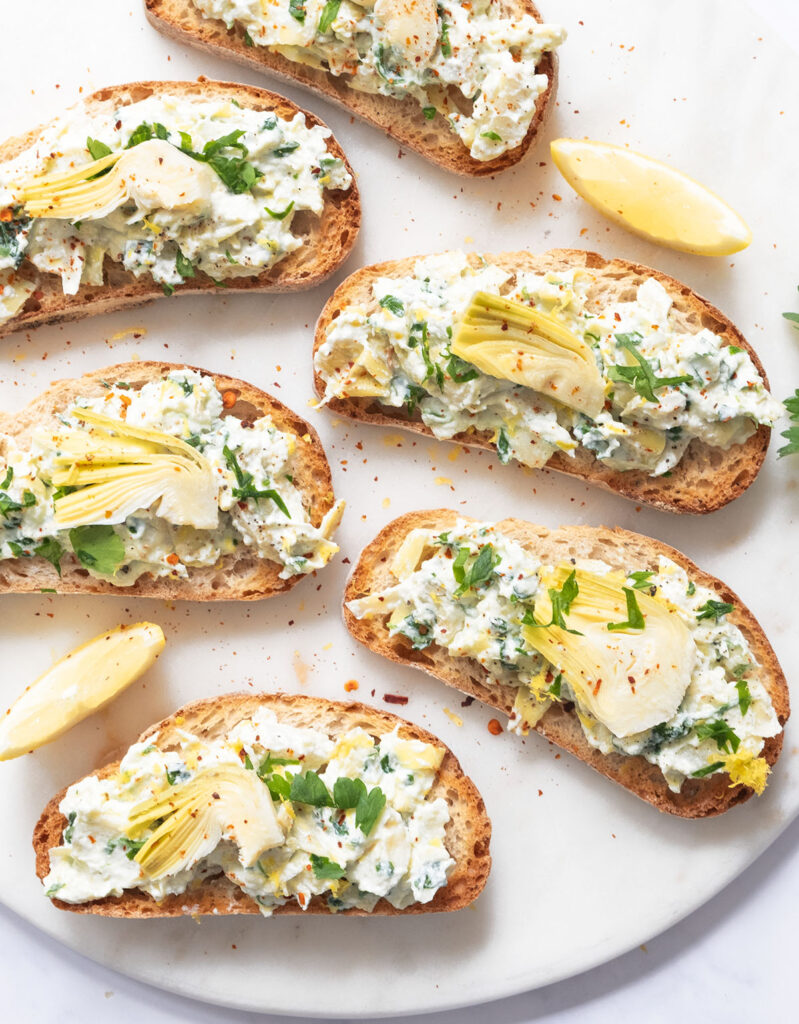
Crostini and bruschetta are from Italy, and both consist of toasted slices of bread topped with a savory topping. The main difference between them is the type of bread used. Bruschetta is usually made with charred artisanal bread, whereas crostini (literally, little toasts) are typically served with smaller slices of bread, such as baguette slices.
Storage tips
Store the artichoke and ricotta mixture in an airtight container in the refrigerator for up to 2 days. If you want to make this bruschetta ahead of time, I recommend topping the bread slices before serving (or at most 1 hour beforehand) to prevent them from going too quickly. Alternatively, you can serve bruschetta and toppings separately, then let your guests assemble them.
More recipes with canned artichoke hearts?
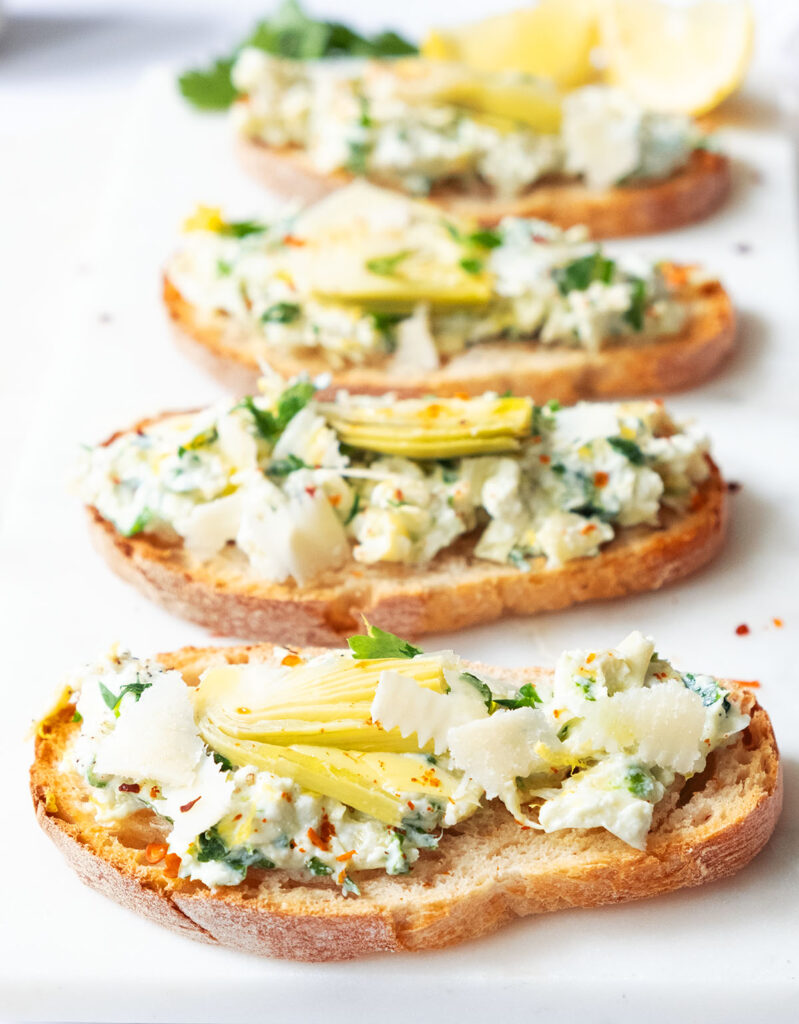
I love all things artichokes, and although fresh artichokes taste amazing, nothing beats the convenience of canned artichokes. Here are a couple of my favorite recipes: artichoke pizza and artichoke salad with beans!
Looking for more appetizer recipes?
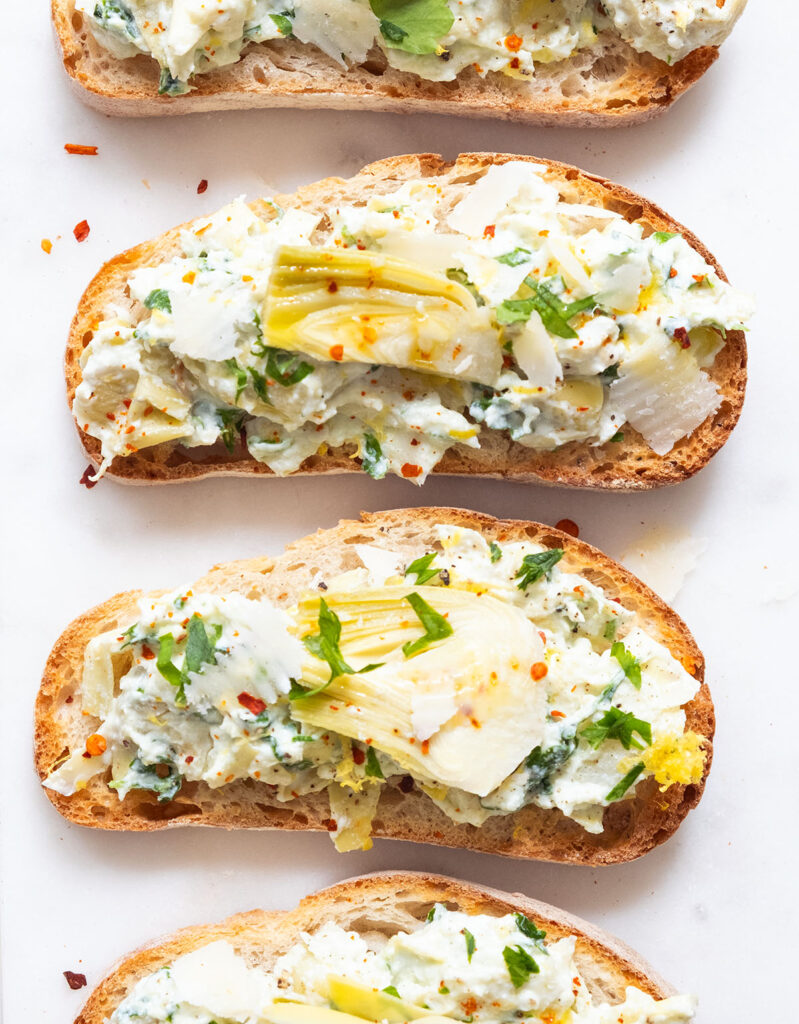
I’ve got you covered! Have a look at this collection of party food ideas: you’ll find a ton of terrific recipes perfect for any occasion. And if you prefer vegan recipes, this collection of 50 vegan appetizers will amaze you!
And if you love crostini, here are some of our favorites:
If you make this artichoke bruschetta, or you have a question, let me know by leaving a comment. I would love to hear from you! x
And for more recipe updates, follow me on Instagram, Pinterest, and Facebook
Artichoke bruschetta.
Servings: 8
Calories: 143kcal
- ¾ cup (170 grams) ricotta cheese
- ¼ cup (25 grams) grated parmesan cheese
- 1 Tbsp extra virgin olive oil
- ½ Tbsp lemon juice
- ½ lemon zest
- 1 small garlic clove, grated or pressed
- ¼ tsp fine salt, or according to taste
- ⅛ tsp freshly ground black pepper, plus more to serve
- 1 can (14oz/400 grams) canned artichoke hearts, drained and chopped
- 2 Tbsp flat-leaf parsley, chopped
Bread
- 8 Ciabatta bread slices, cut into ½ inch slices
-
Place ricotta, parmesan cheese, extra virgin olive oil, salt, pepper, garlic, lemon juice, and zest in one bowl and mix until well combined.
-
Add chopped artichokes and parsley, and toss again to combine. Taste and make sure you’re happy with the seasoning.
-
Using a serrated knife, slice the baguette into slices no wider than ½-inch. Toast them under the broiler or in a preheated oven (375°F/190°C) until they dry out and turn golden around the edges. It takes from 5 to 7 minutes; keep an eye on them.
-
When it’s time to serve, top each slice of bread with the artichoke mixture, sprinkle with freshly ground pepper, lemon zest, and chopped parsley. Enjoy!
Calories: 143kcal | Carbohydrates: 15g | Protein: 6g | Fat: 7g | Saturated Fat: 3g | Polyunsaturated Fat: 1g | Monounsaturated Fat: 2g | Trans Fat: 0.01g | Cholesterol: 14mg | Sodium: 278mg | Potassium: 71mg | Fiber: 1g | Sugar: 2g | Vitamin A: 124IU | Vitamin C: 1mg | Calcium: 108mg | Iron: 1mg
Join my newsletter for free weekly recipes!
PakarPBN
A Private Blog Network (PBN) is a collection of websites that are controlled by a single individual or organization and used primarily to build backlinks to a “money site” in order to influence its ranking in search engines such as Google. The core idea behind a PBN is based on the importance of backlinks in Google’s ranking algorithm. Since Google views backlinks as signals of authority and trust, some website owners attempt to artificially create these signals through a controlled network of sites.
In a typical PBN setup, the owner acquires expired or aged domains that already have existing authority, backlinks, and history. These domains are rebuilt with new content and hosted separately, often using different IP addresses, hosting providers, themes, and ownership details to make them appear unrelated. Within the content published on these sites, links are strategically placed that point to the main website the owner wants to rank higher. By doing this, the owner attempts to pass link equity (also known as “link juice”) from the PBN sites to the target website.
The purpose of a PBN is to give the impression that the target website is naturally earning links from multiple independent sources. If done effectively, this can temporarily improve keyword rankings, increase organic visibility, and drive more traffic from search results.





Leave a Reply