


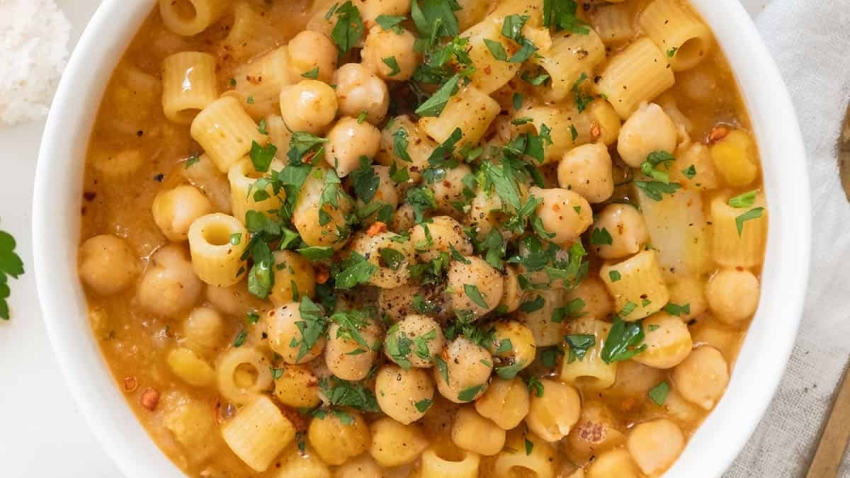
Chickpea Pasta Recipe (Pasta e Ceci)
This post may contain affiliate links. Please read my disclosure policy for more details.
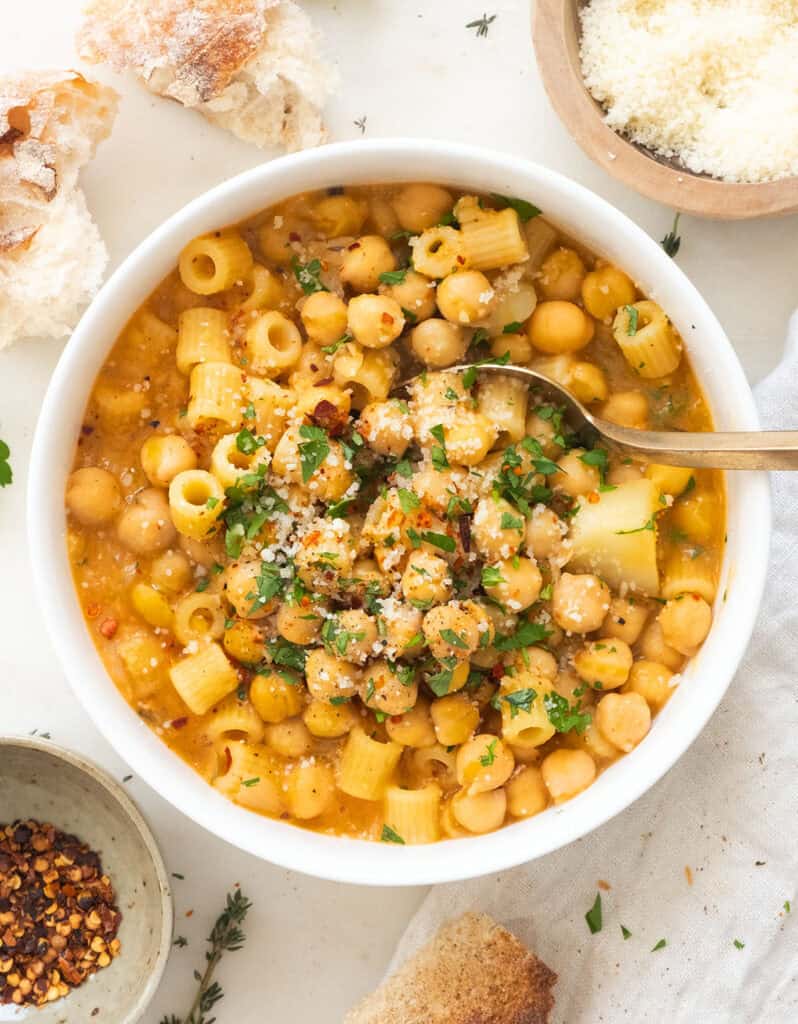
This delicious pasta with chickpeas, aka Italian “pasta e ceci”, is one of the best one-pot family meals ready in less than 30 minutes. It’s budget-friendly, uses a handful of pantry staples, and it tastes like heaven.
Published in March 2020/Updated in March 2026
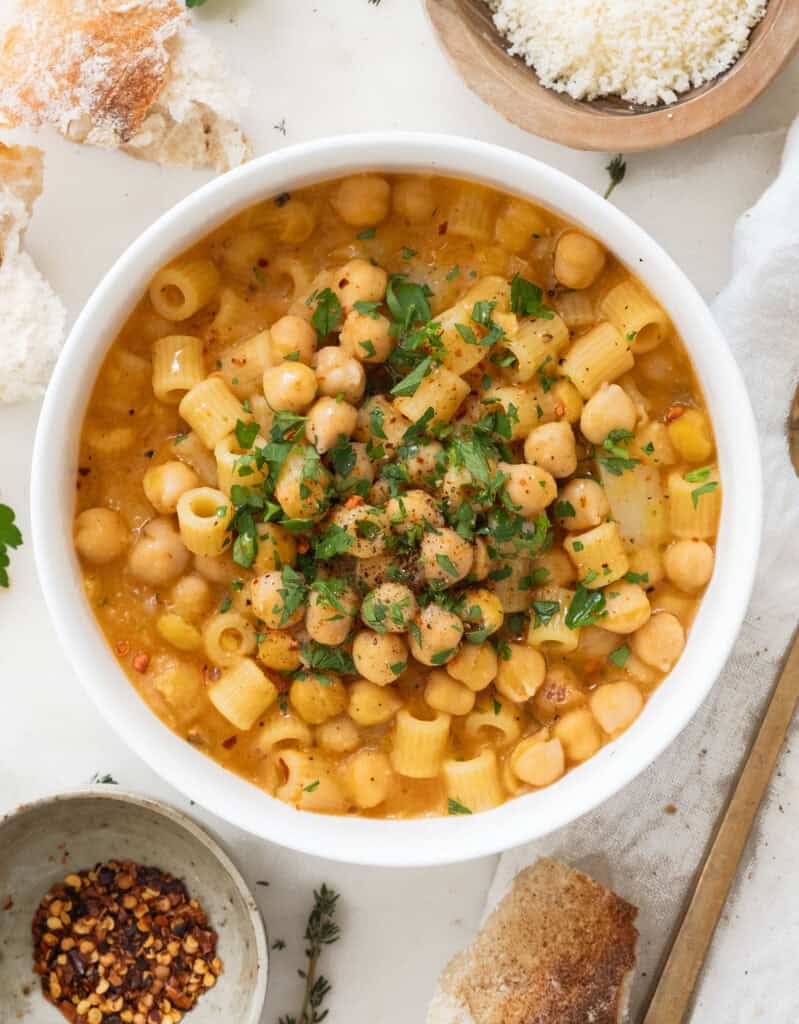
This is one of the first one-pot pasta recipes I published a few years back, and I just had to share it again to encourage you to make it if you haven’t already!
Join my newsletter for free weekly recipes!
This chickpea pasta recipe is definitely a staple in traditional Italian cuisine, where it’s very popular to cook pasta with pulses like pasta fazool, pasta with lentils, and pasta with peas; all of which have gotten rave reviews!
Today’s pasta with chickpeas is another keeper, a no-frills, budget recipe I grew up on and still a hit with my household.
Here is the deal: minimal ingredients, everything cooks in one pot, maximising flavor and texture (no need to drain the pasta!), and a flavorful meal ready in less than 30 minutes.
What’s not to love? It’s also full of plant-based protein, totally budget-friendly, and easy to whip up from scratch with just a handful of pantry staples.
Here is my Italian chickpea pasta recipe for you to try!
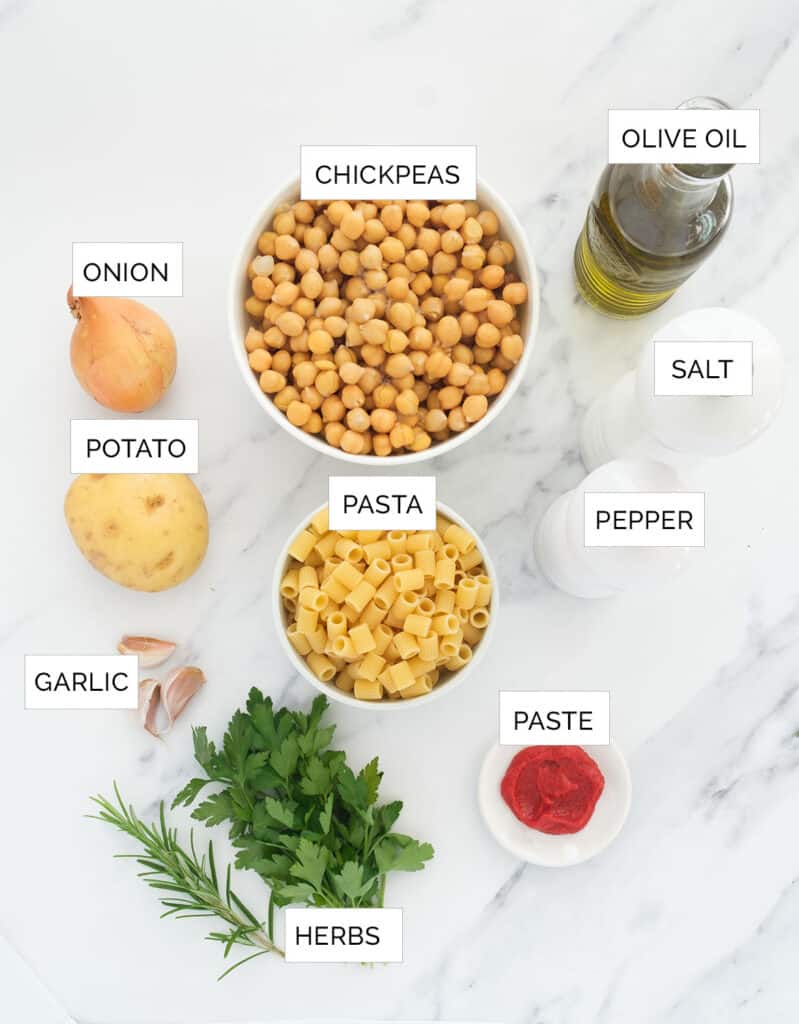
List of the ingredients
- Chickpeas
- Pasta
- Onion & garlic
- Rosemary or bay leaf
- Extra virgin olive oil
- Tomato paste
- Potato
- Parsley (optional)
- Salt & pepper
How to make a chickpea pasta recipe
(Note: This is a quick description; the full recipe is at the bottom of the page.)
- Sauté minced garlic and diced onion in olive oil in a large pot.
- Add chickpeas, diced potato, rosemary, and tomato paste.
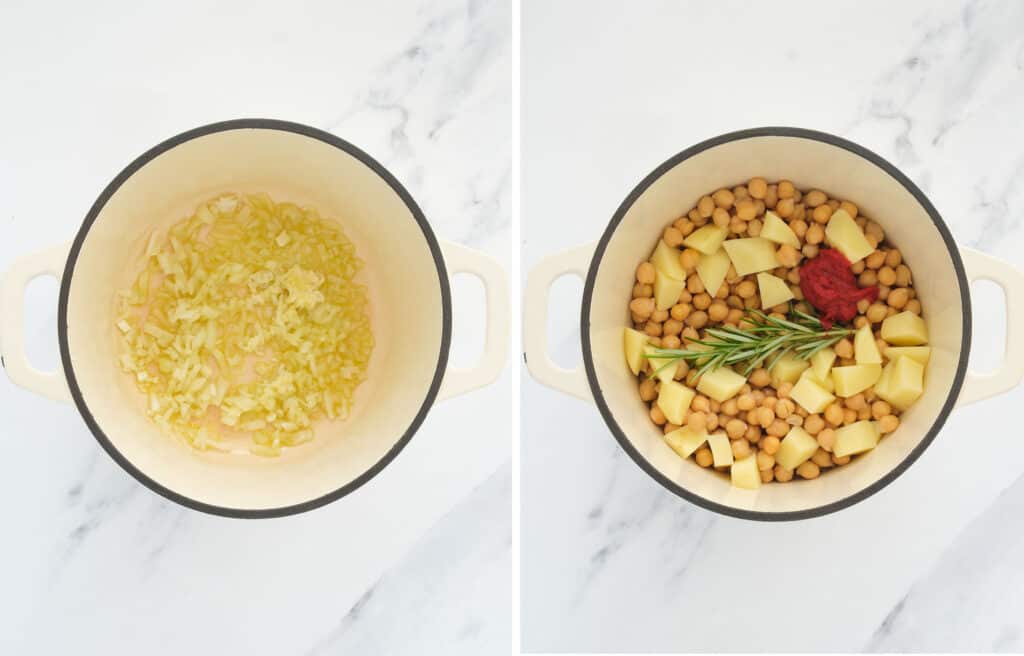
- Stir in broth, salt, and pepper, and cook for 10 minutes.
- Remove the rosemary, blend half of the chickpeas, or smash the potatoes with the back of a spoon to thicken the broth.
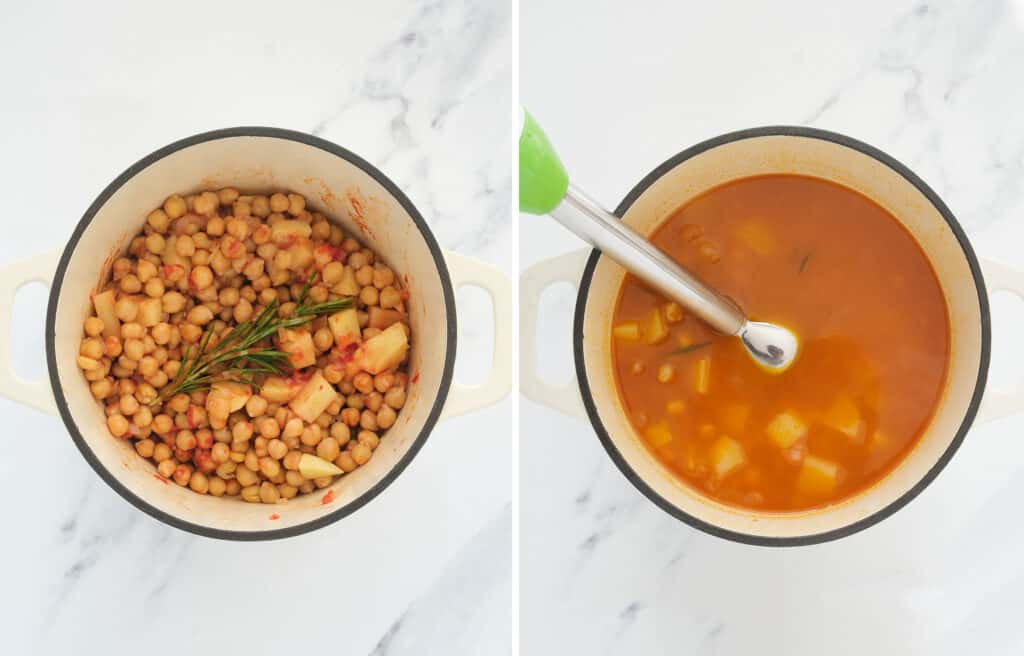
- Bring to a boil, add the pasta, and reduce the heat to a bare simmer.
- Stir frequently until the pasta is done. Before serving, stir in chopped parsley and extra-virgin olive oil, and adjust the seasoning if needed. It will be delicious with some crusty Italian bread, black pepper focaccia, or garlic bread on the side. Buon appetito!
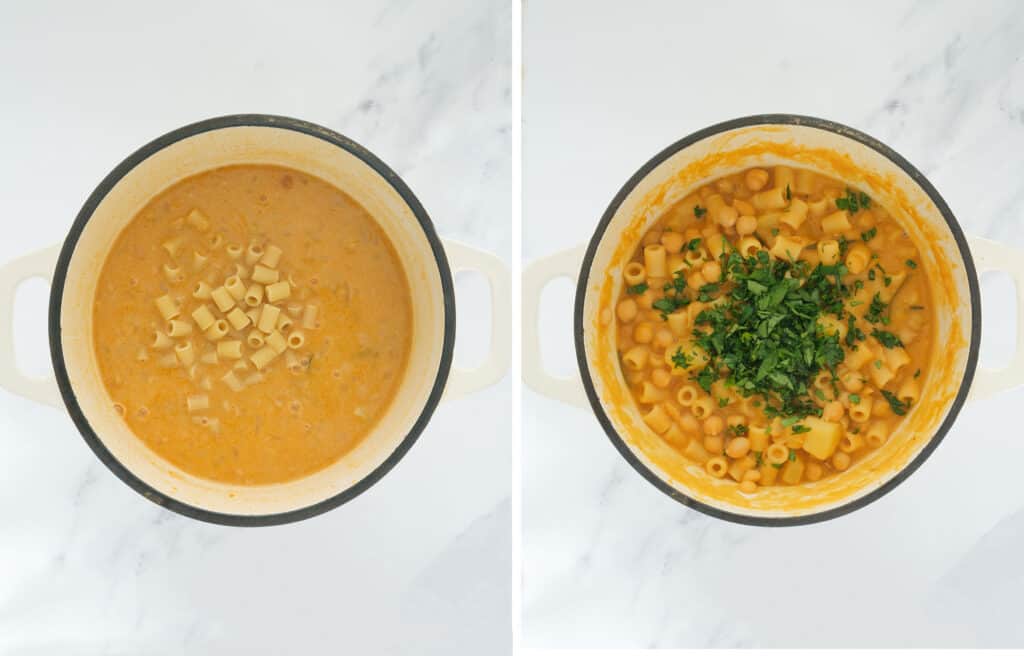
The liquid quantity on the recipe card is an estimate. Depending on the type of pasta, you might need to add or reduce the amount of water.
RECIPE NOTES
Chickpea pasta recipe ingredients
Onion + garlic + olive oil: We usually skip the classic soffritto in this recipe, but we simply start with garlic and onion sautéed in extra-virgin olive oil to build flavor.
Chickpeas: The recipe calls for 2 cans (15oz each) of chickpeas for convenience, or 9oz (500 g) of homemade cooked chickpeas if you have time to soak them overnight. Cooking them on the stove takes 1 ½ to 2 hours, while cooking them in the Instant Pot takes about 17 minutes.
Fresh herbs: A small sprig of rosemary or a bay leaf adds a wonderful aromatic flavor. You can use 1/4 teaspoon of dried rosemary, thyme, or Italian herb seasoning instead.
Broth: You can use low-sodium vegetable broth or water. Start with the amount of liquid stated in the recipe, then add it gradually as much as needed.
Pasta: Small pasta shapes like ditalini are a must for this popular chickpea pasta recipe, but feel free to use whatever short pasta shape you have on hand. Another popular option is breaking long pasta shapes like noodles, pappardelle, or spaghetti into smaller pieces.
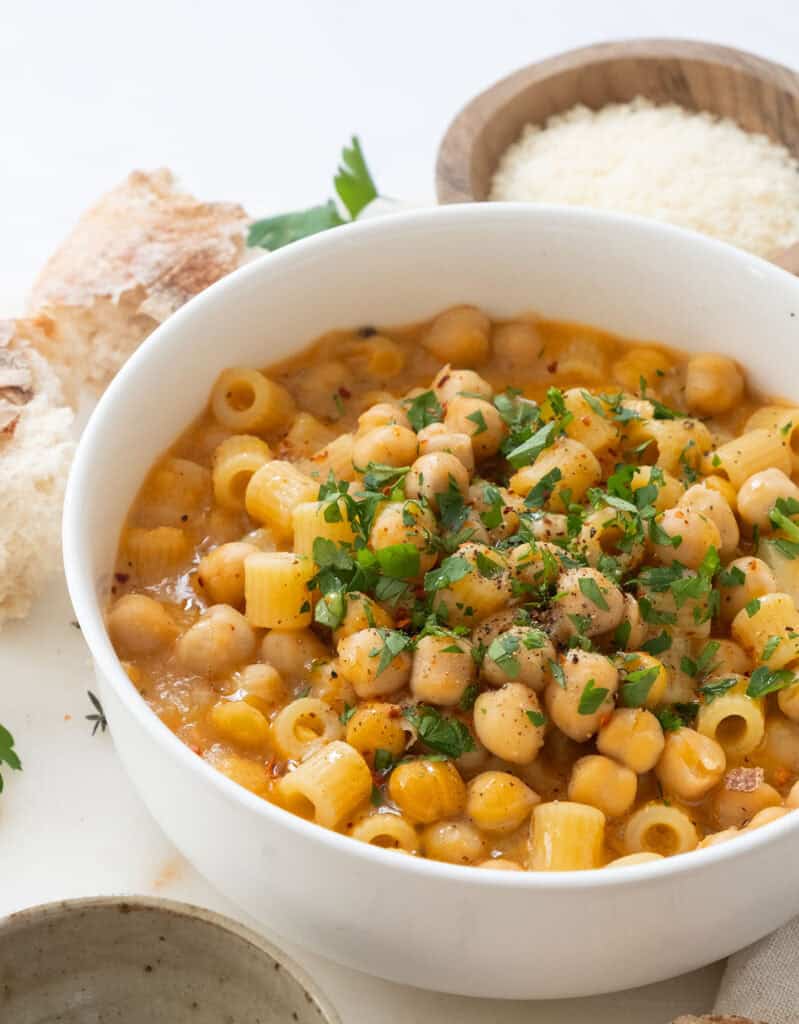
Extra flavor: In addition to checking the seasoning before serving, I recommend drizzling each bowl with extra-virgin olive oil, sprinkling black or red pepper flakes, and garnishing with fresh parsley.
Pro Tips
There are many pasta-with-chickpeas recipes, but I love cooking mine all in one pot. Here are a few tips:
- Use a large, thick pot to ensure nothing sticks to the bottom. I used a cast-iron Dutch oven.
- Blend or smash part of the chickpeas and potatoes. This step is optional, but it thickens the broth and gives a more satisfying texture.
- Cook pasta and chickpeas together in one pot to maximise flavor.
- The liquid-to-pasta ratio should be just right. The excess liquid should be absorbed by the time the pasta is cooked. Depending on the shape of the pasta, you might need more or less liquid.
- Simmer your pasta. The liquid is added gradually to the pasta, which absorbs it entirely and releases its starch.
- Stir often, until the water is absorbed. Don’t walk away!
- Adjust the seasoning. Before serving, make sure the flavors pop. Serve with freshly ground pepper, extra-virgin olive oil, and Parmesan cheese if you like.
How long does it keep?
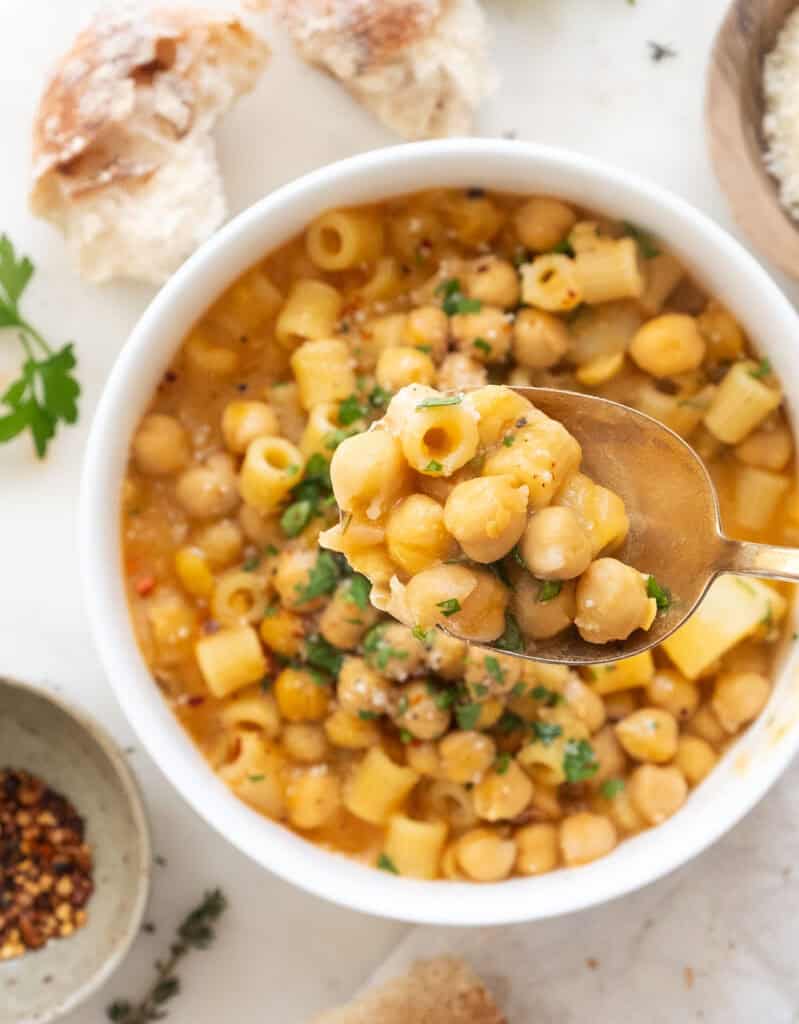
If you have leftovers, keep the pasta with chickpeas in a tight-lid container in the fridge for 2-3 days. However, the pasta will absorb liquid significantly as it sits. To reheat, add 1 cup of water until it’s thinned to the desired consistency, then gently warm over medium-low heat.
More recipes with chickpeas?
If you love them as much as we do, don’t miss this helpful collection of delicious chickpea recipes. Here are a few of our favorites:
Let me know if you make this chickpea pasta recipe or if you have any questions! Leave a comment, send me a message, or rate it.
I would love to hear from you!
And for more recipe updates, subscribe to my newsletter and follow me on Instagram, Pinterest, and Facebook.
Chickpea Pasta Recipe
Servings: 4
Calories: 472kcal
- 1 tablespoon olive oil or extra virgin olive oil
- 1 medium-sized onion, diced
- 3 garlic cloves, minced or pressed
- 2 cans (14oz/400gr each) chickpeas, drained
- 1 medium-sized potato, cubed
- 1 tablespoon tomato paste
- 1 rosemary sprig or 1 bay leaf
- 4 cups (960 ml) low-sodium vegetable broth (or water), use more if needed
- ¾ to 1 teaspoon fine salt, or to taste
- ⅛ teaspoon black pepper
- 8oz (220 grams) short pasta shapes (shells, orecchiette, ditali...)
- 2-3 Tbsp chopped parsley (optional, but recommended)
To serve (optional)
- drizzle of extra virgin olive oil
- freshly ground black pepper
- grated parmesan or pecorino cheese (optional)
-
Heat the olive oil in a large Dutch oven or heavy-based pot over medium heat. Once the oil is shimmering, add the diced onion and cook until softened, about 5 minutes. Stir in the garlic in the last two minutes.
-
Place chickpeas, the cubed potato, and the tomato paste, and the rosemary spin the pot (you can also use dried herbs – see notes in the post).
-
Next, add vegetable broth or hot water, salt, and pepper (1 tsp of salt is fine if you use water or low-sodium broth, but if you use regular broth, adjust the seasoning at the end; see notes below). Raise the heat to a boil, then cover the pot, reduce the heat, and cook for 10 minutes, until the potatoes are tender.
-
Turn off the heat, remove the rosemary, and puree only part of the chickpeas with an immersion blender. Alternatively, smash the chickpeas and potatoes with the back of a spoon or a potato masher. Be careful; the liquid is still hot.
-
Bring to a light boil again, stir in the dried pasta, and cook, stirring often (otherwise the pasta will stick to the bottom of the pot). Cook until the pasta is tender but still firm to the bite. You don’t need to cover the pot with a lid, but make sure you keep an eye on it. If the broth looks too thick, add a touch of water and thin to the desired consistency.
-
When it’s ready to serve, taste and adjust the seasoning with salt and pepper according to your taste.
-
Stir in freshly chopped parsley, divide into bowls, and serve with a drizzle of olive oil, freshly ground black pepper, and grated Parmesan or Pecorino cheese if you don’t keep it vegan. Garnish with more parsley, and enjoy!
If you don’t have an immersion blender, scoop out about 1 1/2 cups of the chickpeas and some broth into a blender, puree until smooth, then return the mixture to the pot.
Seasoning: I usually cook pasta e ceci with water, but if you prefer to use regular vegetable or chicken broth, keep in mind that it might taste quite salty on its own. It’s important to adjust the seasoning at the end rather than at the beginning, as you never really know how strong the salt from the broth is.
Nutrition facts: The nutritional values are for one serving only. They are based on an online nutrition calculator. It’s an estimate and should not be considered a substitute for a professional nutritionist’s advice. Please see my disclosure policies.
Calories: 472kcal | Carbohydrates: 83g | Protein: 19g | Fat: 8g | Saturated Fat: 1g | Polyunsaturated Fat: 2g | Monounsaturated Fat: 3g | Sodium: 628mg | Potassium: 671mg | Fiber: 12g | Sugar: 9g | Vitamin A: 96IU | Vitamin C: 10mg | Calcium: 87mg | Iron: 5mg
Join my newsletter for free weekly recipes!
PakarPBN
A Private Blog Network (PBN) is a collection of websites that are controlled by a single individual or organization and used primarily to build backlinks to a “money site” in order to influence its ranking in search engines such as Google. The core idea behind a PBN is based on the importance of backlinks in Google’s ranking algorithm. Since Google views backlinks as signals of authority and trust, some website owners attempt to artificially create these signals through a controlled network of sites.
In a typical PBN setup, the owner acquires expired or aged domains that already have existing authority, backlinks, and history. These domains are rebuilt with new content and hosted separately, often using different IP addresses, hosting providers, themes, and ownership details to make them appear unrelated. Within the content published on these sites, links are strategically placed that point to the main website the owner wants to rank higher. By doing this, the owner attempts to pass link equity (also known as “link juice”) from the PBN sites to the target website.
The purpose of a PBN is to give the impression that the target website is naturally earning links from multiple independent sources. If done effectively, this can temporarily improve keyword rankings, increase organic visibility, and drive more traffic from search results.




Leave a Reply